PestNetOnline
Login© 2026 Rentokil Initial plc and subject to the conditions in the Legal statement
Termites are one of the most destructive pests, causing an estimated $6.8 billion in property damage each year across the United States.* For businesses and commercial property owners, termite activity poses more than a structural concern. Left unaddressed, infestations can lead to business disruption, loss of inventory, and potential liability issues.
Commercial termite prevention is a strategic investment in asset protection. Proactive measures can help protect commercial buildings, reduce the risk of costly downtime, and preserve the integrity of infrastructure. With professionally managed termite prevention, protection can be seamlessly integrated into ongoing operations, minimizing disruption while providing continuous defense against termites. To learn more about our commercial termite control services, fill out the contact form below.
In many cases, signs of termite activity appear before termites themselves are ever seen. Because these pests often hide in walls, flooring, or structural components, early detection is essential in commercial buildings.
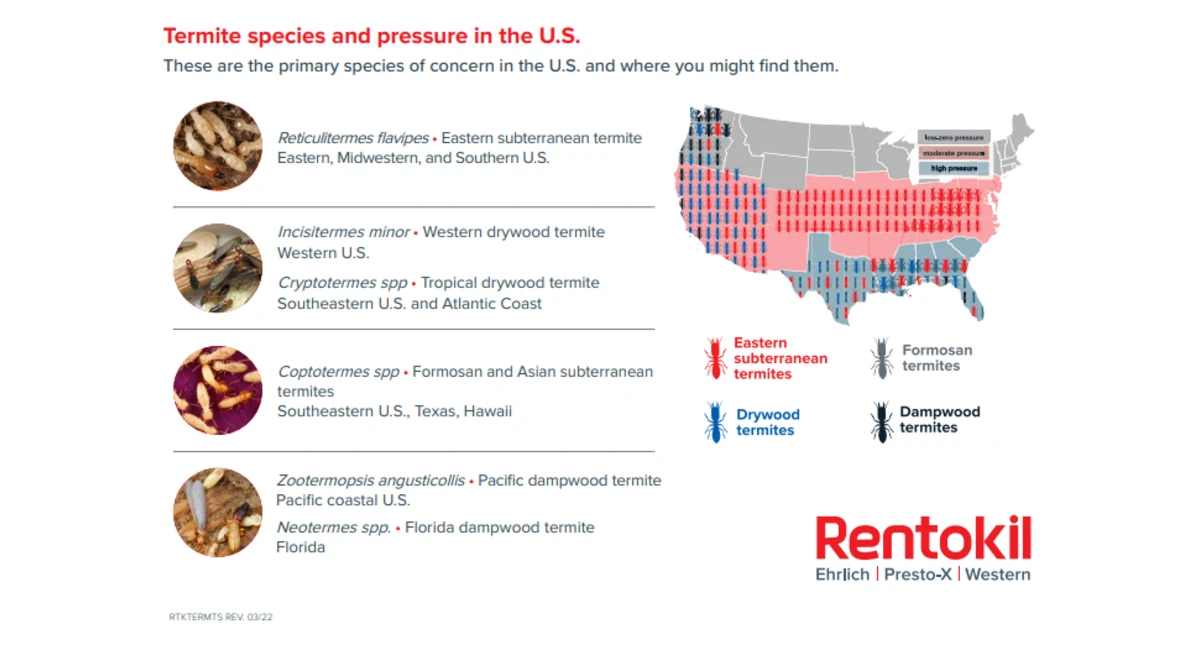
If you notice flying or swarming termites on your commercial property, contact Rentokil promptly for a professional assessment. Early detection is critical to limiting damage and reducing risk. You can also ask your Rentokil technician about a termite baiting and monitoring program, which can help detect termite activity early and provide ongoing insight into potential threats before they impact your property.
Effective commercial termite prevention focuses on reducing conditions that can attract termites and make structures vulnerable to infestation.
Termites can look different at different stages of development. Swarmers, or reproductives, are termites that have wings and are often mistaken for flying ants. Termite swarmers have straight antennae, two pairs of wings of equal length, and a uniform body with no narrow “waist.” Knowing these differences can help identify swarmers during mating flights. Termite appearance can vary based on the type of work the termite does within the colony.
Termites are highly social insects, organized into three distinct castes: workers, soldiers, and reproductive swarmers. Understanding how these colonies function is key to effectively protecting your business from costly damage.
You can take steps to help reduce the risk of termites at your business, but complete prevention requires professional support. Managing moisture, repairing leaks, avoiding wood-to-soil contact, and removing excess wood from the property can help make your building less attractive to termites.
There are no proven natural methods that reliably keep termites away from a business. While certain conditions can discourage termite activity, such as those mentioned above, these measures do not eliminate colonies. However, termites can still travel underground or within structures without visible signs, which is why natural deterrents alone are not a dependable long-term solution for commercial properties.
Even with the best construction practices and ongoing maintenance, termites can still find ways to access a structure over time. That’s why professional commercial termite prevention and control is essential. Regular inspections and expertly managed prevention programs can help reduce risk, identify activity early, and protect your commercial property from costly damage over time.
*https://www.pestworld.org/pest-control-information/pest-control-faqs/termites/#faq-item-4. Accessed January 2026.