Rentokil and Terminix are joining forces to serve you even better!

1-855-633-6260 Call us for a free quote Contact us

Common moth species

Moths may look small and harmless but they can cause surprising amounts of damage to clothing, textiles and stored products in general.

In the U.S. there are a few moth species that can cause problems for your business.
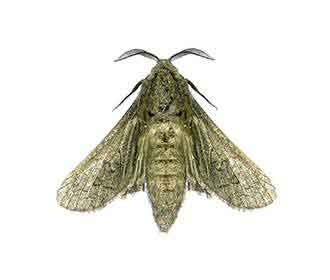
Brown house moth

Brown house moth

(Hofmannophila pseudospretella)

The brown house moth is one of the most common moth species.
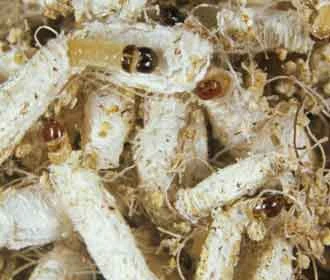
  • Adult: 8-14 mm long, brown in color with three or four darker spots
  • Larva: up to 6 mm long, white with a tan head

  • Normally one generation per year.

  • Generally regarded as a scavenger
  • Larvae may wander considerable distances prior to pupation
  • Larvae feed on a variety of plant and animal textiles like wool, leather and feathers
Case-bearing clothes moth

Case-bearing clothes moth

(Tinea pellionella)

The case-bearing clothes moth creates more regular holes in fabrics.
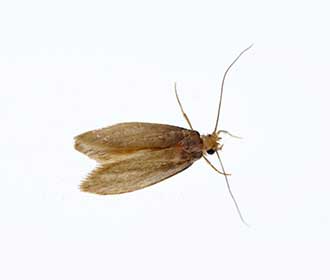
  • Adult: 6-8mm long, dark buff forewings with three faint spots (may appear as two)
  • Larvae: up to 10 mm long, creamy white in color.

  • Similar to the common clothes moth.

  • More rare than the common clothes moth
  • Found in imported goods, such as hides or objects of animal origin
Common clothes moth

Common clothes moth

(Tineola bisselliella)

The common clothes moth larvae are responsible for making irregular holes in fabrics.
  • Adult: 12-13 mm long, straw-colored wings with no markings
  • Larvae: 10-15 mm long, creamy-white with a brown head

  • Cycle from egg to adult is usually about 6 weeks
  • May reach 10 -18 months if food is scarce or temperatures are cold

  • Adults do not feed
  • Runs rather than flies
  • Avoid the light
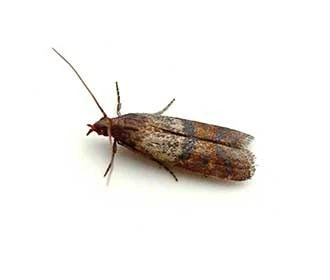
Indian meal moth

Indian meal moth

(Plodia interpunctella)

Indian meal moths feed principally on stored products.
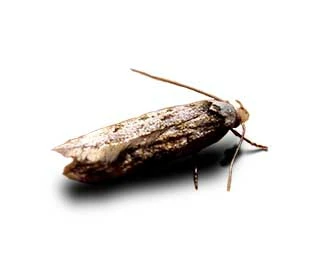
  • Adult: about ½ in long, reddish-brown forewings with gray and brown body
  • Larvae: ½ in long, pink, brown or almost greenish
  • Pupa: encased in a silk cocoon or unprotected

  • Can be completed in 27-305 days

  • Often found fluttering near light instead of maintaining a direct line of flight
  • Damage occurs when larvae spin large amounts of silk that gather fecal pellets, cast skins, and eggshells in food products
White-shouldered house moth

White-shouldered house moth

(Endrosis sarcitrella)

White-shouldered house moths are generally less damaging to textiles.

  • Adult: 6-10mm long, white head with mottled wings
  • Larvae: up to 12 mm long, cream-colored with red-brown head
  • Pupa: encased in a silk cocoon

  • Normally one generation per year

  • Often found in unheated outdoor buildings
  • Larvae scavenge on a wide range of foods

If you have seen any of these moth species in your business, don’t hesitate to reach out to the moth experts at Rentokil today. Call us at 1-855-633-6260 or contact us online to schedule a moth control service visit.

Choose your industry

Get in touch

Fabric pests

There are many different pests that infest fabrics in the United States resulting in costly damages.