PestNetOnline
Login© 2026 Rentokil Initial plc and subject to the conditions in the Legal statement
Rentokil's story is one of incredible growth, fueled by scientific breakthroughs, constant customer focus, and a global vision. For over 100 years, the company has been at the forefront of pest control, constantly evolving and adapting to meet new challenges. At the heart of our global operations is Rentokil Initial, our parent company, which continues to drive our wide range of services and innovations.
Rentokil's history traces back to Professor Harold Maxwell-Lefroy. He was an entomologist whose groundbreaking timber treatment saved the roof timbers of Westminster Hall in the Houses of Parliament in London. This achievement sparked a demand for his expertise and led him to partner with an assistant, Bessie Eades. Together, they launched Rentokil in 1925, named after their revolutionary wood treatment.
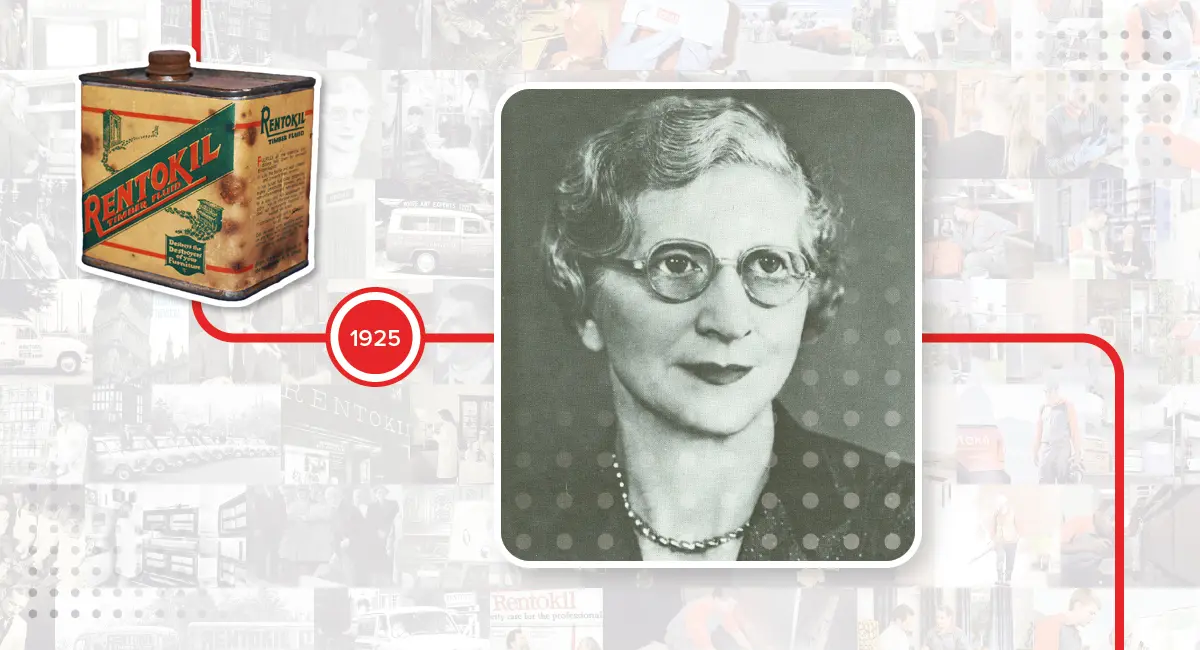
Tragically, Maxwell-Lefroy passed away shortly after, but his legacy lived on through Eades. She purchased his timber fluid formula rights and relaunched Rentokil (Sales) Ltd in 1928. Eades's business knowledge and the product's effectiveness propelled the company's early success. Rentokil's initial products included insect treatments, moth repellents, furniture cream, and a germicide. The top seller was an insecticide, initially called Kilit, later renamed Rentokilit.
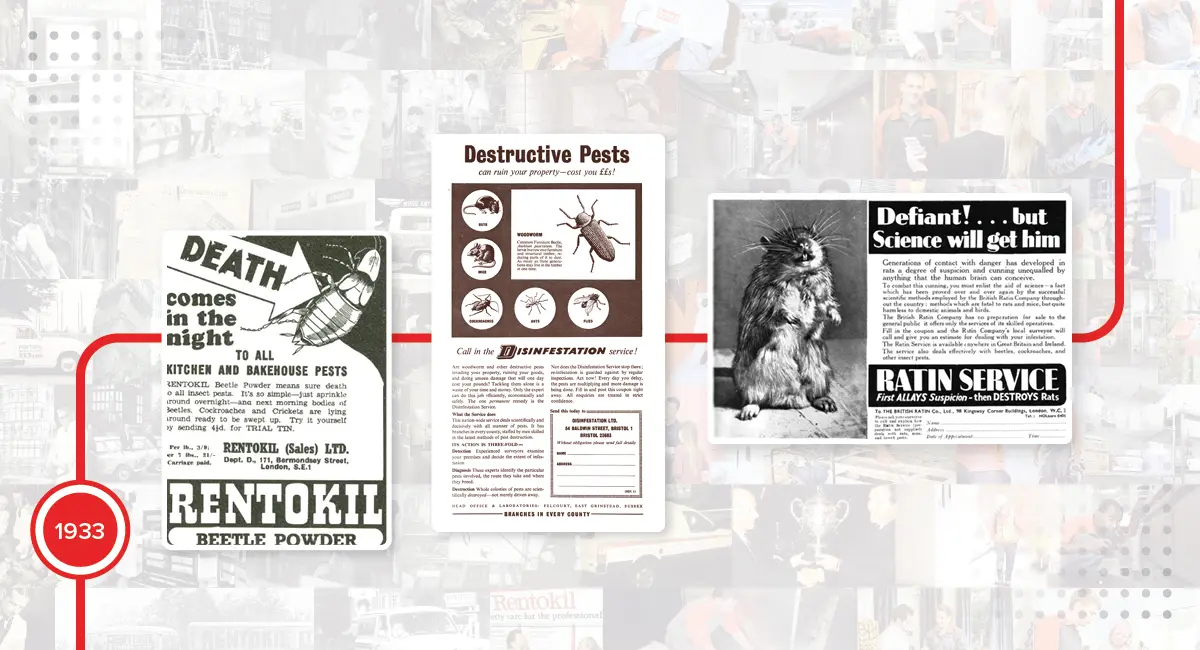
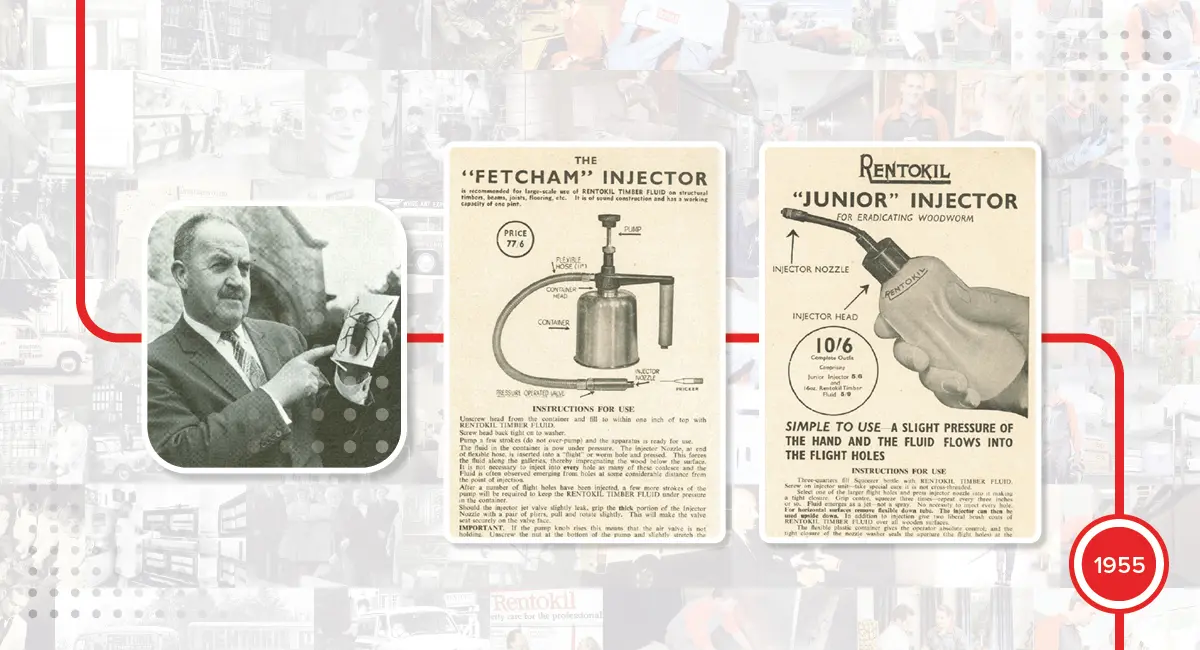
In 1944, Bessie Eades hired Dr. Norman Hickin, an expert on wood-boring beetles and a great communicator. His expertise in wood-boring beetles and his ability to effectively communicate technical information was instrumental in strengthening the Rentokil brand. Dr. Hickin's public education efforts significantly shifted perceptions of woodworm infestations, which created a substantial growth opportunity for the company. His invention of a specialized applicator for injecting timber fluid, patented in 1948, further fueled this growth, selling over a million units by the 1950s.
Rentokil experienced a period of rapid growth and began to offer more diverse services. A key moment was the 1961 purchase of Thomas Harley Ltd., a 61-year-old Scottish company. This acquisition brought Rodine rat poison and a moth repellent into Rentokil's product line. Rodine is still used today, though the formula has been updated.
Throughout the 1960s, the company continued to expand its reach worldwide. They made their first international purchase in Kenya and then moved into 21 more countries across Europe, Australasia, Southeast Asia, the Caribbean, and South Africa. This global growth continued in the 1970s and expanded into the United States.

Over the decades, Rentokil has grown from a small business with a single product into a global leader in pest control. Initially focused on timber treatments, Rentokil broadened its expertise to cover various pests, including rodents, insects, and wildlife. Today, Rentokil has acquired multiple companies that cover a wide range of services, including hygiene services, food safety, and even plant care.
Our strategic mergers and acquisitions are key to Rentokil's growth story. We've joined forces with leading companies like Ehrlich Pest Control, Presto-X, and Western Exterminator to expand our reach and enhance our expertise in the United States. Most recently, the company acquired Terminix in 2022, ranking Rentokil Initial as the world's largest pest control company.
At Rentokil, we're always learning and improving. Our commitment to research and innovation has been a cornerstone of our success. Our teams of scientists study pests to better understand their behavior and biology, which helps us develop new and better ways to control them.
We also know that good service is just as important. That's why we work hard to give our customers the best possible experience, from the first phone call to the ongoing treatment of their pest problems. We want to ensure everyone is happy with our work and feels safe and protected in their homes and businesses.
Rentokil has a long history of technological innovation. From the early timber treatment to modern digital pest management systems, the company has consistently pushed the boundaries of what's possible. In 2024, the company opened the Rentokil Terminix Innovation Center in Dallas, Texas. This modern facility is focused on researching and testing new pest control methods. Scientists at the center work on environmentally friendly solutions to help control termites, mosquitoes, and other common pests.
At Rentokil, we have continued to develop various innovative products over the last few decades, including:
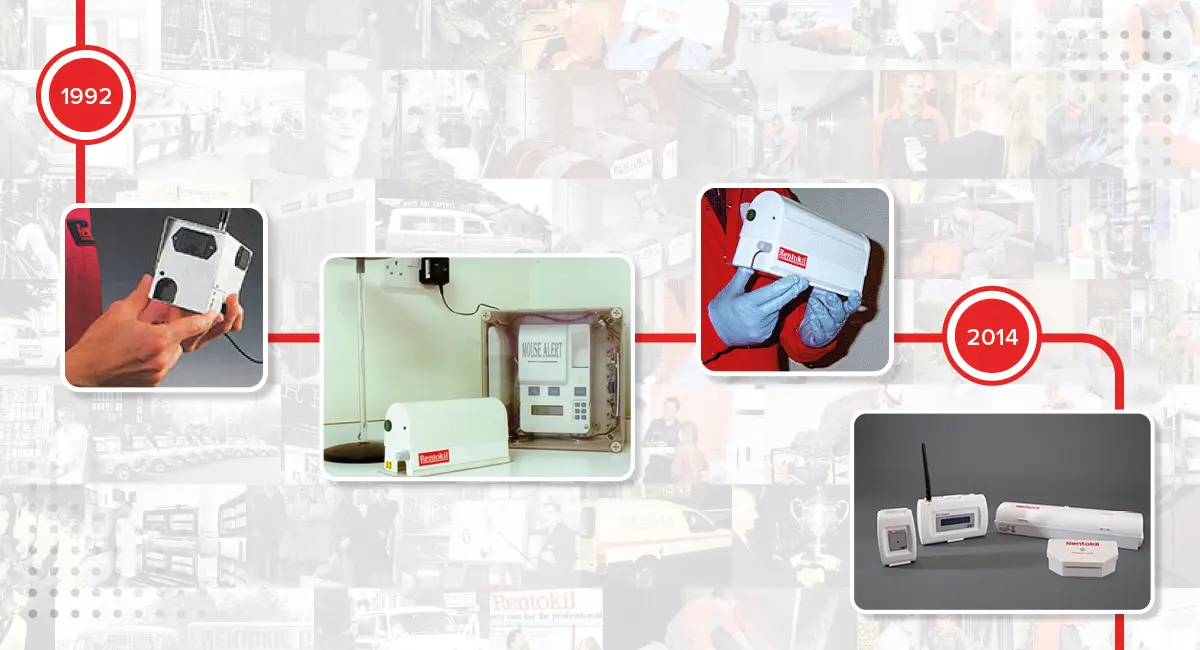
Rentokil has achieved a lot in its first 100 years in pest control. We started with a simple wood treatment and became the world's leading pest control provider. Along the way, we've created new technologies, like our connected PestConnect system, and championed sustainable practices. But we know the future of pest control will bring new challenges, including climate change, increasing urbanization, and pesticide resistance, which will demand even more innovative solutions. We can continue overcoming these hurdles with AI and data analytics.
Our vision for the next century is to continue leading the way in pest control, driven by our commitment to innovation, sustainability, and our customers. We're not just looking back at our achievements but looking forward to building a better future for pest control.