myRentokil
myRentokil login© 2026 Rentokil Initial plc and subject to the conditions in the Legal statement
At the food processing and restaurant sector, efficiency, sustainability, and innovation are key to success. At Rentokil, we have designed Lumnia, a state-of-the-art LED Insect Light Trap (ILT), to cater specifically to the unique requirements of this industry. Lumnia not only features an impressive 80% extended reach but also achieves up to 79% energy savings. Its LED lamps are entirely mercury-free, ensuring compliance with the highest environmental standards.
Flies can easily contaminate food by spreading and transmitting diseases and pathogens such as typhoid fever, tuberculosis, dysentery, Salmonella, and E. coli. This puts raw materials and food at risk of contamination, posing a serious threat to consumer health. Such contamination can have severe negative impacts on businesses and their reputation.
What truly sets Lumnia apart is the exceptional durability of its LED lamps, which last 33% longer than other LED solutions on the market. This guarantees effective performance for up to four years, significantly reducing the need for frequent replacements. Moreover, Lumnia contributes to a 62% reduction in carbon emissions, making it an environmentally responsible choice for Singapore's food manufacturing and restaurant sector.
With the R&D capabilities at Power Centre in the UK, Rentokil is equipped to help you rise above your business challenges, ensuring a safer and more sustainable environment for your operations.
Flies can transmit a multitude of different pathogens, causing significant risk to health and severe impact on businesses. Developed with innovative patented LED technology, Lumnia units are designed to attract, kill and encapsulate insects hygienically, eliminating the risk of contamination. Lumnia LED electric fly traps give you and your customers peace of mind.
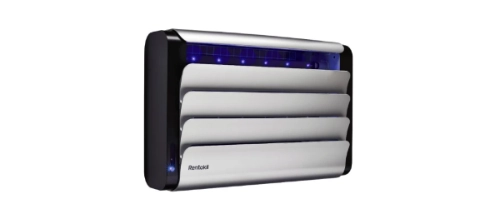
Innovative LED fly traps
High attraction output LED lamps are optimised for a fly control catch rate tested by our Rentokil experts through the 'Half Life' test.
Energy saving
Lumnia units automatically adapt from day to night to reduce energy consumption. Its high attraction output LED lamps offer average energy savings of 61% compared to equivalent competitor fly traps.
Built for customer environments
The Lumnia fly trap range includes four high-performing units with a modern, seamless design that offers lower glare from LEDs and reduced visibility of caught flies.
Dimensions:
W 547 mm, H 298 mm, D 156 mm
Weight:
5.14kg
Type:
Glueboard / Encapsulation
Complement the best fly trap with foam blitz solution
The Lumnia fly trap is a 21st century pest control marvel. Offering enhanced energy savings and diverse application, this device is one of the most enduring units of its kind on the market. Click here to discover how these tall claims are backed by cutting-edge technology.
Learn about the research and science behind our new Lumnia fly control units range
Currently available in silver, the newest additions to launch are Lumnia Compact in black, blue, red and champagne
Learn more about flies and the risks they can pose to human health
In Singapore, the most effective fly traps include electric fly killers (like UV light traps), sticky traps, and baited fly traps. UV light traps, such as Rentokil’s Lumnia, are particularly effective as they attract flies using ultraviolet light and capture them on sticky boards, preventing contamination from fly fragments. These traps are ideal for food and non-food manufacturers, as well as the food and beverage sector , offering continuous protection without the use of chemicals.
Fly traps control the population by either attracting or physically capturing flies. UV light traps emit light that draws flies, and once they come close, they get caught on glue boards or in an electrified grid. Sticky traps use non-toxic glue to trap flies that land on them, while baited traps lure flies using food-based or chemical scents. These traps help reduce the number of adult flies that can spread bacteria and diseases. This is especially important in Singapore’s warm, humid climate, where flies can reproduce quickly.
You can purchase high-quality fly traps in Singapore from a variety of places, including major hardware stores like Home-Fix, DIY stores, and pest control service providers such as Rentokil. Online platforms like Lazada and Shopee also offer a range of fly traps, including electric fly killers, sticky fly traps, and baited solutions. For industrial-grade or commercial-use traps, contacting pest control professionals, such as Rentokil, ensures you get durable and highly effective products.
Yes, eco-friendly fly traps are available in Singapore. Many traps now use non-toxic, biodegradable materials that are safer for the environment and people. Sticky traps and baited fly traps often fall into this category, as they rely on physical trapping mechanisms rather than chemicals. Products like Rentokil’s Lumnia units are energy-efficient, and utilise LED lights that consume less electricity while still effectively attracting flies.
Regular maintenance is key to keeping your fly traps effective. For UV light traps, it is important to replace glue boards frequently as they can lose their stickiness over time. This is especially true in moist environments. Furthermore, you should clean the trap housing regularly to remove dust and insect remains. This will ensure that the UV light’s effectiveness isn’t diminished. For baited traps, change the bait solution as directed, typically every few weeks. Always follow manufacturer recommendations for safe and effective cleaning and maintenance.
A common mistake when using fly traps is placing them near competing light sources. This reduces their effectiveness in attracting flies. Additionally, positioning traps too close to food preparation areas can lead to contamination. Not regularly cleaning or replacing parts, like glue boards or bait, can also decrease the trap’s efficiency. Finally, relying solely on fly traps without addressing the root cause of the infestation, such as improper waste disposal or food storage, can lead to recurring fly problems.