myRentokil
myRentokil login© 2026 Rentokil Initial plc and subject to the conditions in the Legal statement
Houseflies, fruit flies, and bluebottles—these common types of flies in Singapore seem to be prevalent everywhere and anywhere all-year-round. With the warm and humid weather in the city, the swarm seems to be always at peak levels and things only get worse when the days are particularly warmer.
While you would usually ignore them in your homes, this should not be the case when these pests are in your business premises. For example, at a food establishments business such as restaurants, cafes and bakeries, or high dependency sectors such as food manufacturers.
Flies are regarded as one of the world’s most disruptive pests. Their presence at your business environment can cause some detrimental impact. This includes the following:
They spread at least 65 different diseases including cholera, dysentery, typhoid fever, salmonellosis, and E. Coli with the bacteria they carry on them. This is a more pressing concern for food businesses and any other organisations that handle food and beverage including retail and grocery stores, hotels, logistics operations, education and healthcare facilities.
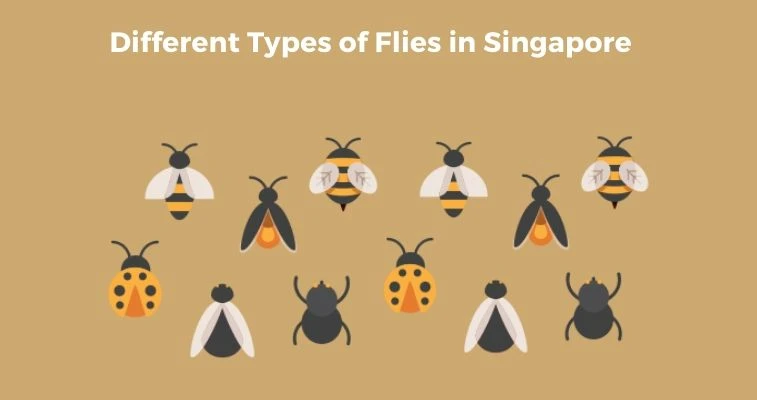
What sets them apart is difference in their breeding nature, reproduction process and their physical appearance. Houseflies for example feed on almost anything including food waste and faeces. Their reproduction is quick, usually lay within 8 to 72 hours in batches from 120 to 150. The pupae matures a timeframe of up to 28 days to mature and hence, regular monthly inspection is beneficial to check for new infestations.
Fruit flies on the other hand is often breed in unclean drains and soiled utensils takes up to 30 days for pupae to develop into an adult. There is also the bluebottle flies that is frequently associated with waste bins like a scavenger hunting for food. There go for faeces and dead animals and in fact hatch their eggs in a shorter period of up to 18 hours. Lastly, these flies take a maximum of 12 days to mature.
You may not see a fly infestation as a problem, but it does not take long for flies to breed, 10 days for some species. A single fly can lay up to 900 eggs in its lifetime within 3-4 weeks thus, illustrating how a small infestation can quickly get out of hand. In fact, most businesses would have at least one garbage or waste bin. The contents within these bins can reach 30°C, which is also the temperature ideal for breeding conditions.
Because of their varied food appetite, a food establishment is a perfect feeding ground for flies. Particularly if it comes with poor housekeeping, presence of food exposed and undisposed trash. Above all, infestation thrives in warmer temperature and typically, a kitchen is warmer due to food preparations, heating and warming activities.
What is worse is most would pay more attention to the visible flying adults but not flies in other life stages. Larvae could well be breeding in hot spots such as:
It is important to seek fly prevention by engaging pest control for flies to avoid slipping into a concerning task to deal with. Check out more fun facts on flies in this Filthy Facts About Flies infographics.
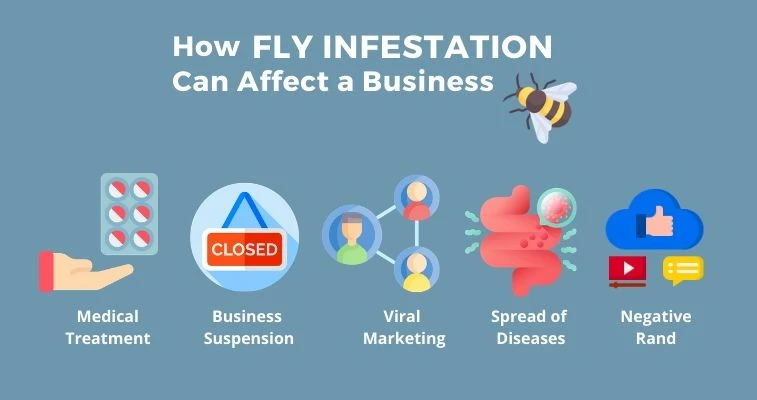
Flies are carriers of over 200 different pathogens that they can transmit through three mechanisms: contact with their body parts, regurgitation during feeding, and excretion of faeces. Flies feed and lay eggs on decaying materials and later land on food or surfaces where food is prepared. Their anatomy is structured with a “straw” like tongue to suck up any matters they consume that habours harmful bacteria. Not only can this compromise with food safety standards but can also put your employees and customers at risk. Some of the common diseases flies spread includes Salmonellosis, Typhoid, Cholera and parasite worms.
Aside from the food-borne diseases said above, flies are also found to transmit respiratory infections such as tuberculosis. Therefore, you might not only find yourself dealing with an infestation but compensation claims resulting from medical conditions it has caused as well. As we face the COVID-19 pandemic and dengue outbreaks—a disease that is endemic in Singapore—the last thing we would want is to cause another health threat that is otherwise preventable with sanitation and proper pest control measures.
With the Internet and social media, it is easy to publish negative reviews online and issues in your business. Encounter with a fly infestation while amidst of dining can quickly become viral. This not only impact attracting new patrons, but also potentially reducing repeat visits from regulars. Above all, public’s confidence and trust towards the business credibility and safety is potentially damaged.
In worse cases, your business may face financial penalties, charges and potential business suspension. Additional recovery actions have to undertake before permitting business to resume. This include further site investigation, audit findings, documentation, review processes and standards to name a few. To make things more complicated, the cost to win back consumer trust can cost a lot more.
Overall, the consequences of a fly infestation can be costly in terms of the damage it can cause to your reputation, operations, and manpower. Engaging professional pest control to get rid of houseflies is a much cost-effective option than paying fines or losing your business. While it is the case, however, there are ways to keep your business food safe and the first step would be identifying what attracts houseflies in the first place. A pest control specialist can perform a thorough assessment of the premise and locate breeding source, key risk areas and possible causes of fly infestation. Call Rentokil Singapore to arrange for a premise check today.
Firstly, whenever there is increased activity around food and water, there is also an increase in food waste created. Secondly, these matters provide the perfect ground for attracting flies to feed on and breeding site to lay eggs. Thirdly, the prevalence of flies in your business also has to do with the weather in Singapore and temperature condition in the kitchen. This has effect on the life cycle of flies. Flies reach adulthood in as little as 7-10 days or even faster as temperatures rise. In addition, with the increasing temperatures, meat, fruit peels, and other food scraps go bad quickly. This creates a rotting environment that attracts flies. Finally, location and environment of the premise matters. For instance with open concepts or cluttered with neighbouring food tenants, cross infestation increases. Above all, standard of housekeeping and facility maintenance plays a vital role in keeping fly infestation at bay.
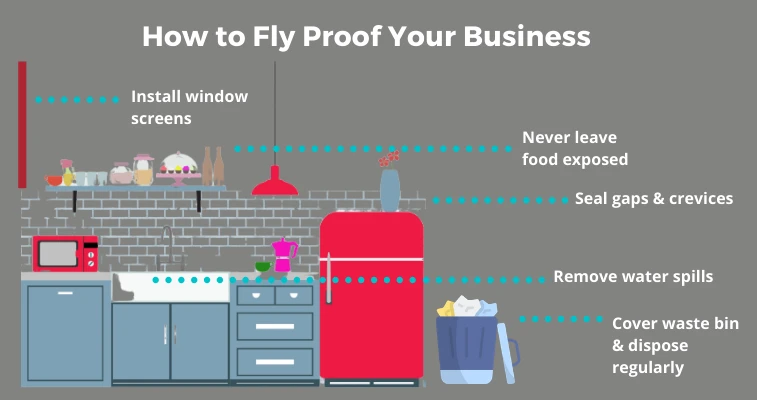
With all these said every remedy for flies should begin by reducing your food waste followed by moving your bin further away from your food serves. It is all about keeping your business sanitation standards as optimal as possible, particularly the food preparation areas and surfaces:
Not just flies can disrupt a food business. Rentokil shares essential pest control checklist for restaurants and 10 ways to get rid of flies in your business.
While it is evident on the importance of engaging professional pest management in flies, there seems to be various challenges on how to get rid of flies.
Engaging professional pest control company is the most effective way to remediate flies from your business. At Rentokil Initial, we offer a range of pest control solutions to help manage a fly infestation in your premises safely and hygienically. Our services are geared towards helping you comply with food safety and other regulations.
As such, we provide a range of commercial insect light traps to cater to your business requirements. Unlike conventional mosquito zappers, our innovation employs a unique technology to capture flies safely and effectively.
Rentokil was the first in global to innovate the cutting-edge-technology fly traps to lure and trap flies effectively. Using LED technology offers a reduced power consumption while maintaining optimal catch rate. In addition, it eliminates the hassle of replacing the conventional UV lamps every year. How LED works is by introducing intense beans of light that penetrates further in the environment. It possess a higher attraction to flies as a result. Flies is particular has a phototaxis reaction, that respond positively to lights compared to other pests such as cockroaches that has negative phototaxis. This means, they will repel to light exposures instead.
Small flies breeding control
We also offer a foam blitz solution to complement the adult fly population control with our fly traps—a foaming agent that is effective in controlling small flies and breeding sites, thus offering protection from flies in their every life stage. These solutions are suitable for use in restaurants, offices, food processing, and industrial and manufacturing establishments. More importantly, it is able to reach inaccessible spaces and gaps with quality efficacy control.
Do you have more questions about keeping flies out of your business? Visit our website or contact us at (65) 6347 8138 to learn more.