myRentokil
myRentokil login© 2026 Rentokil Initial plc and subject to the conditions in the Legal statement
We encounter hovering flies as we dine at a restaurant or walk past an uncovered dump. However, there are pest control measures you can take to get rid of flies especially among businesses running a food sensitive operation including food and beverage, high dependency, hospitality and healthcare. Rentokil shares the top ten essential questions you need to ask about flies control in Singapore.
Agenda:
We are familiar with houseflies that tend to dine with us at cafes and restaurants, where we will buzz them away as they hover around. However, there are species of flies that are associated with food preparation environment filthy spaces and some are bites-causing flies like the sand fly. Here are the four common types of flies you may encounter:
Houseflies are usually seen where food and waste are around, including disposal centers, canteen, food serving area and kitchen. They lurk among the most undesired conditions including decaying or decomposed food scrapes, compost heaps and moist while unsanitised environment that harbour various disease-causing bacteria. With their efficient reproduction as fast as three days, these houseflies can be challenging to eliminate given their other strengths and capabilities.
They are named fruit fly for a reason because of their close connection to fruits and vegetables, particularly around fermenting items, they enjoy the abundance of these fruity meals and tend to breed in drains, food utensils, trolleys and carts where there is presence of these food sources. Common hotspots including preparation area and kitchen where food scrapes and fruit extracts are available for their feeding.
Similarly, their name label is strongly associated with their breeding areas, largely around poorly maintained drains, clogged sewage, sinks, and moist conditions including basements, bathrooms and wet kitchen. Also a pest of poor hygiene, they favour poor sanitation and housekeeping conditions such as moist and unhygienic mops, floor mats and grease traps.
Indeed, they are metallic blue in colour, and favours the filthy environment including bins, waste centers, garbages, leftover scrapes, faeces and dead insects or animals, particularly birds and rats. They breed on decaying matter or dead carcass, it is important to maintain a clean and sanitised environment while having a sound pest control to manage a variety of pest presence to prevent a start of fly infestation.
Read also: Three reasons why you should be worried if your premise are infested with fruit flies

While some pests favour your property structure like termites feeding on wood, or the most palatable food choices like sweets and fats favored by cockroaches and ants, flies largely enjoy the leftovers and places we tend to avoid and neglect. Rentokil Initial shares a list of conditions that attracts flies to your premise:
Firstly, one of the most obvious harm flies among our health and safety is that they are carriers of diseases including Cholera, Conjunctivitis, Dysentery, Gastroenteritis, Salmonella and even Tuberculosis and Typhoid Fever. It is not a surprise causing a list of diseases because of their feeding and breeding habits. Secondly, flies are annoying especially when they hover around our dining activities and potentially cause negative reviews for the business. Thirdly, it can be disruptive in the event of an operation suspension due to investigation, that impacts patronage. Fourthly, financial implications are perhaps most undesired that includes medical reimbursement, penalties and recovery. Above all, business closure is perhaps the last damage we would hope to experience from a flies’ infestation.
We can have an effective and optimal flies control programme by diligently adhering to a few critical factors. This includes adopting an integrated pest management approach covering detection, control, monitoring and maintaining.
Knowing where your enemies are, where and when they surface and what they enjoy feasting on is key in terms of getting rid of flies. Keep a lookout for their presence and sense in their favorite haunts and look for signs of larvae and breeding. In addition, observe where they are coming from and if this is an existing premise issue or cross-infestation challenge where more proofing has to be applied.
This means having proper and adequate pest control programmes in place where regular inspection and servicing of your premise is conducted. For example, spraying at key risk areas, foaming on breeding sites and changing the glueboard that is installed in the flytrap regularly. Eliminating flies food source comprising water, waste, fermented fruits and vegetables and even dead pests or animals and their droppings is the next critical step.
Monitoring and tracking are essential combinations regardless of what we do, to determine and evaluate if we are seeing results from the measures taken. This means, evaluating what works and what does not work, what are key possible reasons leading to inefficacies and what conditions triggers an infestation. This also means, analysing if the flies’ population are consistent or if there are any spikes in population due to various possible factors.
Ongoing care and effort is necessary not just in pest control. However, sustainability and consistency is critical in any aspects we are doing. Hence, we should not merely perform a one-time spring-cleaning or a major renovation of the premise. Education and awareness on pest facts and the dos and don’ts in pest prevention should be conducted regularly among your employees to constantly build reminders. This is because pests occur anytime and may happen for the slightest reasons.
Price of pest control is dependent on the several factors and conditions. Below are some example besides considering the intangible evaluation of the specialist that covers brand, resources, certifications and expertise:

Flies are traveling constantly. With the presence of food source, water and the waste they seek, flies presence is inevitable. Particularly, in a food-natured environment where these food supplies are used daily and relentlessly, it is a common flies’ attractant. Flies have compound eyes. This means they have efficient vision and are able pick up movement and activities quickly. Hence, chasing after flies with a spray or a swat is a lot more difficult. This also explains why efforts to “chase them away” as they hover our food is quite impossible.
In addition, they are able to see activities behind them with 360 vision. Thus, they can increase their defence mechanism against predators and warning alerts that they can seek refuge quickly. Their quick and speedy movement means dealing with them physically is almost impossible unless with robust pest control solutions that eliminate the root source of the problem. Not forgetting, there may be gaps or lapse in current fly control approach. It increases the inefficacy and leads to infestation escalation as a result. This can be due to several factors. Examples include the poor quality of the pest control company, wrong placement of fly-trap, and incorrect key locations for treatments or inconsistent treatment. In summary, there must be adequate awareness on flies facts. This aids in better management in terms of species identification, adopting right usage habits and understanding what methods work best for your premise.
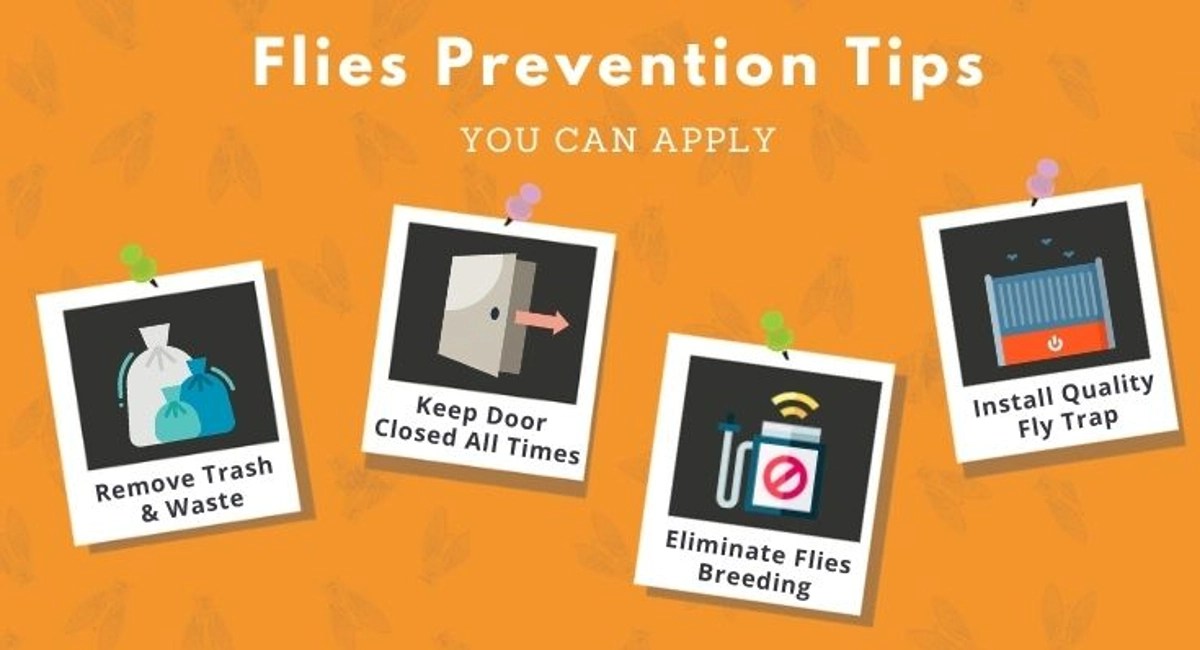
Engaging sound and reliable pest management to keep flies infestation at bay is only the first step to effective pest eradication. It also requires diligent upkeep of the premise and adopting the right habitual culture to manage flies effectively. Firstly, sweep away food debris, bits and scraps immediately to avoid flies feeding on them when they start to decay. Secondly, clear up the grease and grime that slimes along the surfaces and corners that can breed maggots and larvae. Thirdly, dispose of that trash and waste immediately. Do not allow foul smell and stench to develop over time. This attracts flies and even rats or cockroaches. Fourthly, it is important to keep doors closed, particularly the central kitchen and main entrance. It prevents flies from entering from outside and infesting food preparation activities.
Finally, apply adequate proofing in terms of blocking entries. Examples include putting barriers and protective insect screens, or do a structure rejuvenation. This includes sealing the defects, by filling in cracks, crevices or any holes that allow flies entries. Above all, flies prevention start with diligent and proactive inspection and monitoring of the premise. This includes new or additional flies’ signs, increased risk factors, environmental considerations and user’s activities.
There are many pest remedies and tips shared digitally or among friends and family, and some are old pest myths passed by generations. One classic example is making use of light reflections to confuse and repel flies buzzing around. Flies are sensitive to light. However, when light rays become distorted due to their reflective nature, they start to disorientate and navigate away for that period. Some examples of reflective remedies are by hanging shiny metallic discs or bags and bottles of waters on higher eye level.
Some other remedies including improvising a trap system by using soda bottle traps. By mixing sweet or sugary liquid with water and making a cone shape like bottle with an opening is enough to lure and trap flies within. While some will repel with a dish soap fly trap that contains vinegar, sweet liquid or fruit scant and cover them with a plastic wrap with holes poked within to attract flies in.
Lastly, there is also the repelling method that made use of natural deterrent ingredients including pepper, basil, ginger and essential oil with fragrance like peppermint, lemongrass, eucalyptus and cinnamon. In fact, these essential oil scents are also used on other pests like the mosquitoes, rats, cockroaches and ants.
Remaining vigilant against pests and taking note of their early signs is one way to enhance flies eradication efforts. Here are some signs to take notice in your premise:
It is mandatory compliance for food establishments dealing with food safety to adopt a proper pest control service. This includes the control of flies’ population. There are regularities around the inspection of flies’ presence and if the business is adopting up to standard pest prevention measures. Penalties, demerits and suspension are among the non-compliance outcomes and a requirement for any food business registration. However, there are times to call for a pest control company to step up control efforts in the event of a heavy infestation, sudden and acute flies breeding or uncontrollable surge due to environment conditions. For example, there are small fly foaming flush out programme to put out vast breeding sources on key risk areas such as drains, gully, grease traps, trolleys and food carts or tabletops.
Lastly, you should also call the pest control specialist to do a site inspection and risk assessment. This ensures a well controlled premise in terms of fly problem, to avoid unnecessary hassles and disruptions.
Call Rentokil Singapore at (65) 6347 8138 for pest control services today.