myRentokil
Manage your business
After a year of trying to cope with the COVID-19 pandemic and its economic and social consequences, the world is at a crossroads, according to the UN. Addressing the One Planet summit in Paris on 11 January 2021, UN Secretary-General António Guterres said, “2021 must be the year we reconcile humanity with nature. Until now we have been destroying our planet. … We have been poisoning air, land and water and filling oceans with plastics. Now nature is fighting back.”
This drive is seen as a chance to put new energy into the UN’s 2030 Agenda for Sustainable Development, which was adopted by all member states in 2015 and is centred on the 17 Sustainable Development Goals (SDGs). There are now just ten years left to achieve these goals and the UN has called for a decade of action, including a drive for sustainable innovation, financial investments and technology.
So much has been disrupted by the pandemic that people have had to adapt to new ways of working and living. At the same time, it has made more people realise that we cannot go on treating the planet the same way. The UN Secretary-General added, “As we rebuild, we cannot revert to the old normal. Pandemic recovery is our chance to change course. … Every country, city and business must adopt an ambitious roadmap to achieve net zero emissions by 2050.”
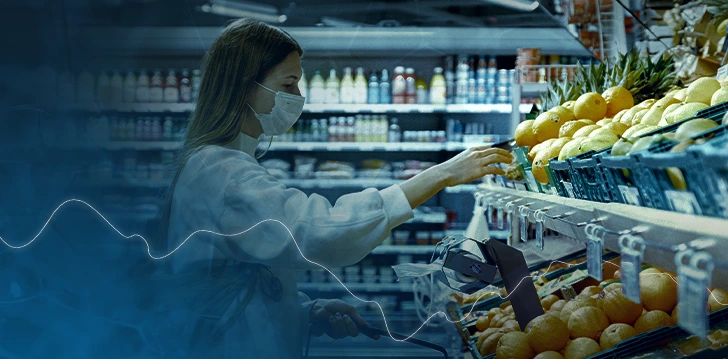
Sustainable food systems are an essential part of many of the SDGs because they impact numerous areas, including nutrition and health, poverty reduction, water security, sustainable energy, CO2 emissions and climate change.
In September 2020, to mark its 75th anniversary, the UN launched the first International Day of Awareness of Food Loss and Food Waste, organised by the Food and Agriculture Organization (FAO) and the UN Environment Programme (UNEP). The aim is to urge everyone to do more to reduce food loss and waste to protect food security and the environment.
Every year, about 14% of the world’s food is lost to spoilage and pests before it reaches the consumer – valued at around $400 billion per year. On top of that is food waste, caused by the inefficient handling and use of food, including during transport, storage and processing, cosmetic requirements for consumers, and lack of planning and cooking skills by consumers. Food loss and waste, together, generate 8% of global greenhouse gas emissions, which amounts to 1.5 gigatonnes of CO2 equivalent every year.
The situation mentioned above was what happened during a “normal” year. Since the COVID-19 pandemic erupted, food supply chains have been disrupted by restrictions on movement and quarantine measures, causing increased losses, especially of perishable food products. Buying habits have also changed by both consumers and countries, so as to build stockpiles of non-perishable food, which causes more waste of other foods. Measures that many countries have been taking to reduce food loss and waste in an effort to improve food security have been put at risk.
There are multiple ways that food businesses can contribute to sustainability, including those that reduce food losses and waste, lessen their impact on the environment and lower carbon emissions in all areas of their operations. Integrated pest management is a tried-and-trusted technique to help prevent food losses from pests at all stages of supply chains in an environmentally sustainable way. Combined with environmental policies extended to all products used, operations and services, pest control can contribute to every food business’s sustainability commitments.
Net zero refers to achieving an overall balance of CO2 emissions into and removals from the atmosphere. Under the legally binding Paris Agreement, 196 countries and territories agreed to limit global warming to below 2°C and, ideally, 1.5°C by 2050 to reduce the devastating effects on the environment as much as possible.
In November 2021, the UN Climate Change Conference of the Parties (COP26) will be held in Glasgow, UK. The purpose of the summit is to accelerate and coordinate action to tackle climate change and achieve the goals of the Paris Agreement by moving the global economy to net zero as quickly as possible.
As part of the build up to COP26, Rentokil Initial has committed to reduce total carbon emissions to net zero by the end of 2040 – ten years ahead of the Paris Agreement targets.
In addition to net zero, Rentokil Initial has also committed to becoming a leader in providing sustainable services, operations and workplaces by developing a sustainability plan that the company will follow for the next 20 years. This plan involves an in-depth analysis across every area of business to find ways to improve sustainability.
Rentokil Initial offices around the world are creating local sustainability plans, drawing on specialists in areas such as transportation, chemicals, energy and waste. Here are a few examples of programmes that are already being implemented and show the breadth of work required to achieve whole-business sustainability.
Pest control is one of the key factors in preventing food losses throughout food supply chains. As mentioned earlier, food losses are a significant contribution to CO2 emissions and are a major target in the UN’s sustainable development goals.
There are multiple areas in pest control that can contribute to sustainability, both in the focus across the whole business – such as reducing energy use in buildings and transport, minimising waste, using sustainable products – and in the specific pest control solutions available to customers.
Integrated pest management is the foundation of sustainable pest control, focusing on prevention and smart solutions to deter infestations occurring and avoiding the use of toxic chemicals. IPM saves costs, uses fewer resources – including energy and plastic – and is safer for the environment.
A wide range of non-toxic pest control solutions are available so that companies can make environmentally friendly pest control a part of their sustainability policies. These products and solutions include the following.
The UN Secretary General has called for businesses to adopt a sustainability agenda, including the net zero target for carbon emissions. Governments, the public, analysts and investors are increasingly expecting businesses to show they are taking sustainability seriously. By partnering with a pest control company with a comprehensive sustainability plan, food businesses can be assured that their pest control operations contribute to the sustainable development goals both by reducing food losses and protecting the environment.
Technology and data-driven digital pest monitoring for effective, smart pest management solutions