1300 307 576 Call now Request a callback

Wasp and bee species

literal.hero.continue

In Australia there are around 10,000 wasp species and 2000 bee species, according to the Australian Museum and all have valuable roles in our ecosystems.

A few species can become pests in urban areas and pose a threat from stinging, such as the introduced European wasp which can be aggressive when a nest is disturbed. Bees are rarely a pest and are less likely to sting. The introduced honey bee can cause problems when queens disperse and set up new nests in homes and gardens.

Below are some of the common wasp and bee species that you can encounter in Australia:

  • European wasp and English wasp
  • Honey bee
  • Mortar bee
  • Yellow jackets (social wasp)
  • Carpenter bees

European wasp and English wasp

(Family: Vespidae, eg Vespula vulgaris & Vespula germanica)

These are the two commonly found wasp species in NSW, Victoria, and Tasmania and the ones responsible for causing painful wasp stings.
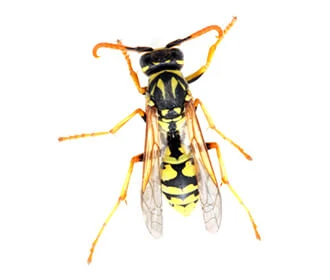
European wasp and English wasp

Identification

  • Yellow and black body, marking varies according to species
  • Workers vary in size from 12 – 17mm

Life cycle and habits of the European wasp and English wasp

Lifecycle

  • Only young queens survive over winter and emerge in the spring to start nest building and lay eggs
  • Workers (sterile females) emerge during early summer and take over nest building 
  • Queen continues to lay eggs
  • New queens and males mate in early autumn
  • Nest dies during winter, including all the males and workers
  • Wasps do not swarm

Habits

  • Nest in old rodent burrows, hollow trees and bushes
  • Indoors, they prefer to build nests in sheltered locations with easy access to the outside, such as lofts, garages and wall cavities
  • Food preferences are insects early in the season when the brood is young and sweet foods later in summer as the brood matures and the workers become more of a pest to humans
  • Females sting readily and can sting repeatedly
  • A colony may have as many as 25,000 individual wasps.

Dealing with wasp infestation?

If you're dealing with the most unwelcome sign of wasps arriving ominously with a sting in their tails, you can rely on our local team for professional wasp control for your home or business.

Our Pest Control Technicians understand that these pests can be dangerous to handle and can offer both convenient and safe solutions to get rid of your wasp problem quickly.

Contact us for a quote

Honey bee

(Apis mellifera)

If you have a problem with a honey bee swarm, contact a local bee keeper or Environmental Health Department as they will be able to arrange for the swarm to be relocated.
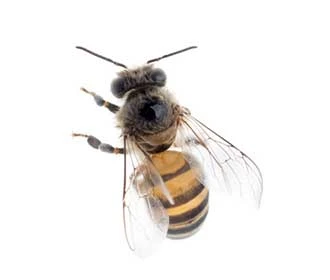
Honey bee

Identification

  • Honey bee workers are around 12 mm in length, similar in size to the 
  • European wasp Bees have a fury abdomen and are mostly black with grey stripes on the abdomen 
  • The queen is larger than the workers and has a longer abdomen and small wings 
  • The drone is also larger than the workers, has a fatter body, large eyes, large wings and no stinger

Life cycle and habits of the Honey bee

Lifecycle

  • Bees have a typical insect lifecycle of egg, larva, pupa and adult. These are all present in a hive for most of the year 
  • Worker bees are produced from fertilized eggs. They develop in around 21 days and live for about 45 days. Workers can lay unfertilised eggs if the colony becomes queenless 
  • Queens are produced when female larva (which would become a worker otherwise) are fed a special food called royal jelly. Queens generally live 3-5 years 
  • Soon after becoming an adult a queen leaves the hive to mate with drones, then returns and stays in the hive unless the colony needs to swarm 
  • Drones, which are male, are produced when a queen lays unfertilised eggs. They take 24 days to develop.

Habits

  • Honey bees normally build hives in hollow trees, wall cavities or roof spaces. They can also build nests hanging from tree branches

    A colony size can often be greater than 30,000 bees Worker bees clean the hive, guard it, forage for nectar and pollen, build the honeycomb cells for the eggs and feed the brood 

    Periodically colonies swarm to new sites. They are not aggressive as there are no young to protect 

    Honey bees feed on plant nectar and pollen. They regurgitate honey and secrete beeswax through special glands in their abdomens 

    Honey bees also produce propolis which is made from plant resins mixed with beeswax and honey. This is used to seal cracks or holes in the hive and is also a disinfectant

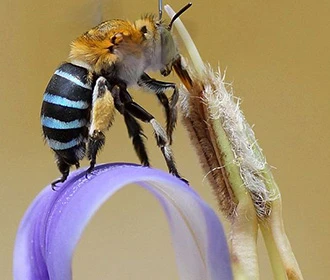
Australian mortar bee (blue banded bee, masonry bee)

(Amegilla sp. 250+ species)

Australian mortar bee

Identification

Life cycle and habits of the Australian mortar bee

Lifecycle

  • Females build a solitary nest in a burrow and lay an egg at the end of the burrow with a pollen and nectar mixture for the larva to feed on 
  • Adults die off in cold season 
  • Young, immature bees stay in the nest until spring

Habits

  • Solitary bee, but multiple individuals can nest close to each other 
  • Nest in soft sandstone cliffs, dried up river banks, soft mortar in buildings, earth banks under houses 
  • Males ‘roost’ on plant stems at night, females in the burrows 
  • Found throughout Australia except Tasmania and in neighbouring tropical countries to India 
  • Not aggressive but can sting if handled roughly 
  • Are good pollinators of some food crops and wild flowers, using a technique called buzz pollination in which the flower is grasped and vibrated by rapidly flapping wings 
  • Limited foraging range of around 300m

Yellow jackets (social wasp)

(Vespula spp.)

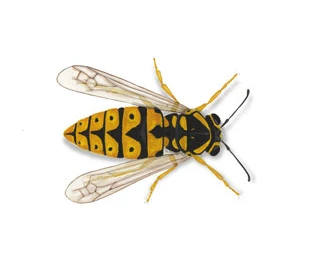
Yellow jackets

Identification

  • Worker 13 mm long 
  • Queen 19mm long 
  • Alternating black and yellow bands 
  • Two sets of wings 
  • Narrow waist 
  • Lance-like stinger

Life cycle and habits of the Yellow jackets

Lifecycle

  • Annual colonies 
  • Queen begins to nest in spring 
  • Aggressive numbers in late summer 
  • Colonies begin to decline by autumn 
  • Only inseminated queens nest over winter

Habits

  • Feeding: early in the year they feed on insects including caterpillars / harmful flies, as colonies mature later in summer they are attracted to sweet food and become more of a nuisance
  • Sting: sting repeatedly, will sting if provoked with symptoms range from swelling to life-threatening allergic shock 
  • Visibility: active during the day as they don't see well at night 
  • Nesting: in trees / shrubs, or internally in attics, hollow walls/ flooring, sheds, under porches/eaves of buildings

Carpenter bees

(Xylocopa spp. — 8 species)

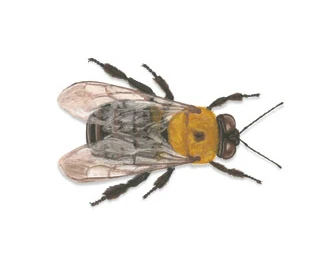
Carpenter bees

Identification

  • Carpenter bees are the largest native Australian bees at 15-24 mm long 
  • Females have a glossy black abdomen and yellow fur on the thorax 
  • Males are covered in yellow brown or olive fur including on the head

Life cycle and habits of the Carpenter bees

Lifecycle

  • Tunnel into wood to lay eggs
  • Life cycle from egg – larva – pupa – adult takes approximately seven weeks 
  • Larva is large and noisy 
  • New adults emerge from the nest late August

Habits

  • Active — late-spring to mid-October 
  • Nesting — they make tunnels in bare, untreated wood to lay their eggs
  • Old nests are used year after year
  • Location — around homes nests can be found in eaves, window trims, fascia boards, siding, decks and outdoor furniture 
  • Feeding — feed on pollen and nectar; pollen is stored in the tunnels for over-wintering
  • Do not sting unless provoked

Paper wasps

(Family: Vespidae, e.g. Polistes spp.)

Paper wasps are native to Australia and commonly found under eaves, pergolas, and sheltered outdoor areas. They are less aggressive than introduced wasps but will sting if their nest is disturbed.

Identification

  • Slender brownish bodies with yellow or reddish markings
  • Long legs that dangle during flight
  • Nests resemble upside-down umbrellas made of paper-like material

Life cycle and habits of paper wasps

Lifecycle

  • Queens overwinter and begin new nests in spring
  • Workers hatch and help with nest expansion and feeding the young
  • New queens and males emerge in late summer
  • Colony size is relatively small compared to European wasps

Habits

  • Nest in sheltered, horizontal surfaces outdoors
  • Feed on caterpillars, insects, and nectar
  • It will sting if the nest is approached or disturbed
  • Nests are often reused in the same location year after year

Mud dauber wasps

(Family: Sphecidae, e.g. Sceliphron spp.)

Mud daubers are solitary wasps known for their mud tube nests. They are non-aggressive and help control spider populations.

Identification

  • Slender black body with yellow legs
  • Skinny “waist” between the thorax and the abdomen
  • Wings folded lengthwise when at rest

Life cycle and habits of paper wasps

Lifecycle

  • Females construct mud nests and provision each cell with paralysed spiders
  • One egg is laid per cell
  • Larvae develop inside the nest and emerge the following season
  • No colony or worker caste

Habits

  • Nests are built on sheltered walls, ceilings, or under eaves
  • Do not defend nests and rarely sting
  • Feed on nectar; larvae feed on spiders
  • Harmless to humans and beneficial in pest control

Flower wasps

(Family: Thynnidae)

Flower wasps are large, solitary wasps often seen in gardens during warmer months. Despite their size, they are entirely harmless.

Identification

  • Black or dark brown with orange or yellow markings
  • Males are winged; females are wingless
  • Often mistaken for hornets due to size

Life cycle and habits of paper wasps

Lifecycle

  • Males fly in search of wingless females
  • Females lay eggs near beetle larvae in the soil
  • Larvae develop underground

Habits

  • Active in spring and summer
  • Pollinate native flowers
  • Do not build nests or form colonies
  • Do not sting and pose no threat to humans

Spider wasps 

(Family: Pompilidae)

Spider wasps are solitary hunters that use spiders to feed their young. They are generally non-aggressive unless provoked.

Identification

  • Glossy black or dark blue body
  • Long legs with hooked claws
  • Some have orange wings

Life cycle and habits of paper wasps

Lifecycle

  • Females paralyse spiders and lay eggs on them
  • Larvae consume the spider as they grow
  • Adults feed on nectar

Habits

  • Solitary and do not form colonies
  • Frequently seen in gardens and bushland
  • Non-aggressive unless handled
  • Important for spider population control


While most native bees and wasps in Australia play vital roles in pollination and pest control, some species—especially introduced ones—can become a threat when nesting near homes or businesses. Understanding the differences between species can help you stay safe and avoid unnecessary panic. If you suspect a wasp infestation or encounter a swarm in or around your property, it’s best not to approach it yourself. Contact our local pest control experts for fast, safe, and effective wasp management. 

Pest control services

Protecting Australian homes and businesses for over 50 years

  • Safe, effective, environmentally-friendly pest control
  • A broad range of pest management options to suit your home and business needs
  • With over 1,500 local, accredited pest controllers, we provide a rapid-response service across all of Australia
Find out more

Related posts