PestNetOnline
Login© 2026 Rentokil Initial plc and subject to the conditions in the Legal statement
Fifteen years ago, West Nile virus was making headlines and making people nervous. In 2003, reported cases of the mosquito-borne disease spiked to nearly 10,000 across the U.S., and news of birds being struck by the disease in droves seemed common. However, today, you don’t hear as much about it – but that doesn’t mean you shouldn’t be on your guard.
While reports of West Nile virus illness have never reached the same levels as they did in 2003, there are literally thousands of West Nile virus illnesses and dozens of deaths reported every year in the U.S.
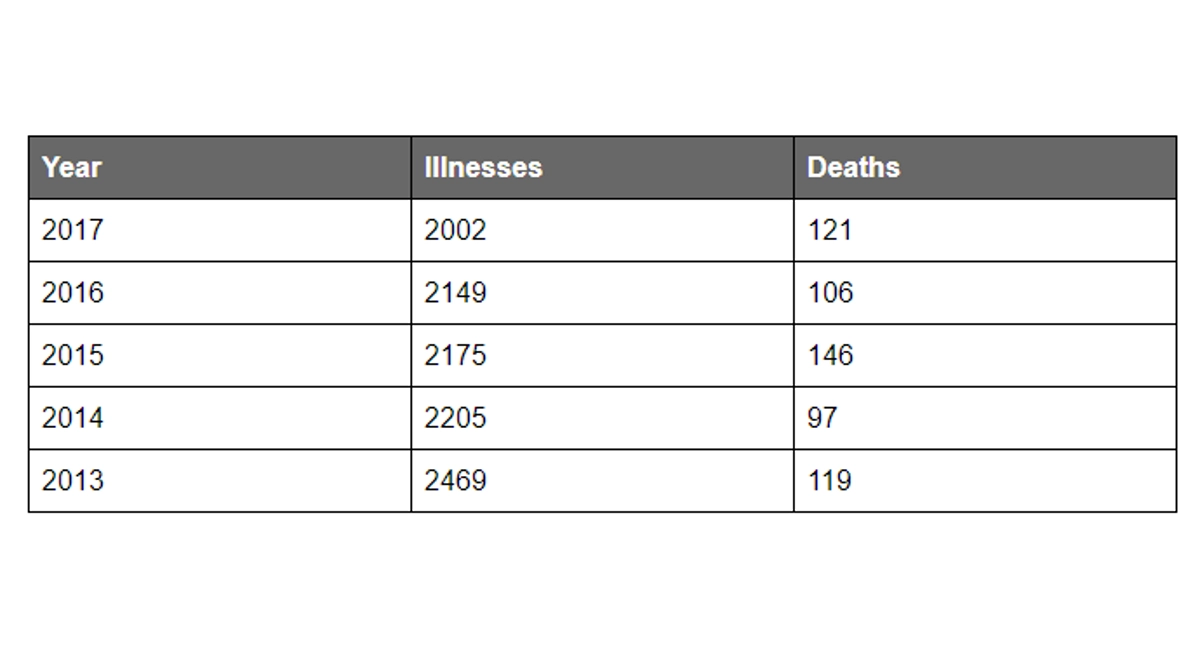
The chart below illustrates total number of illnesses and deaths over the last five years, according to the U.S. Centers for Disease Control.
As temperatures drop at the end of the summer and early fall, many people forgo wearing insect repellent, but that’s the worst thing you can do. Mosquitoes are still very active in many areas in these waning summer months, and ensuring that you are protected is paramount.
In fact, the CDC often sees spikes of West Nile reports in late summer and early fall. To keep up with the most recent data or see activity in your state, visit the CDC’s West Nile Virus Statistics and Maps page. West Nile virus data is updated weekly June through December.
Conditions that are ripe for mosquito breeding also follow severe thunderstorms and hurricanes that impact some areas in the late summer and early fall months. Following a storm, localized mosquito activity will often spike, putting people who are working outside during cleanup efforts at further risk.
Humans most often contract West Nile virus when bitten by an infected mosquito. Many people infected will exhibit no symptoms; however, those that do may have flu-like symptoms, fever, rash, neck stiffness, and headache.
The U.S. Centers for Disease Control and Prevention report that about 1 in every 150 cases of West Nile virus can lead to the central nervous system being affected, which can result in encephalitis and death. More severe symptoms include all of the above, along with stupor, disorientation, coma, tremors, convulsions, muscle weakness, vision loss, numbness and paralysis. West Nile virus infection has been shown to leave some people with long-lasting or permanent neurological symptoms. The disease can be especially dangerous for the very young and the very old, as well as anyone with a compromised immune system, but it is important to note that anyone, even the healthiest of people, can contract the disease.
Whether you’re working outside, have employees that do, or are just enjoying leisure time with your family, the following tips can help protect you and others from mosquitoes.