myRentokil
myRentokil login© 2026 Rentokil Initial plc and subject to the conditions in the Legal statement
The pest that everyone thought was gone and almost only heard of in the nursery rhyme, "Goodnight, sleep tight, don’t let the bed bugs bite," is now present in nearly every country in the world and is dealt with in many Singapore homes. Frequent travel, lack of public awareness and the bed bug’s ability to reproduce quickly and in great numbers are what causes bed bugs to come, and lead to a rise in the spread of bed bugs. Is there a way from preventing the spread and multiplication of bed bugs?
The bed bug reproduction process begins with what is known as traumatic insemination. This is where the male pierces the female’s abdomen and injects sperm directly into her body cavity. It may sound bizarre, but this method allows for rapid fertilisation and plays a major role in how bed bugs reproduce fast.
Once fertilised, the female needs a blood meal to begin laying eggs. Without feeding, egg development is delayed or halted. With access to a reliable food source, reproduction begins quickly, adding to the challenge of infestation control.
A single female can lay between 1 to 7 eggs a day, and over the course of her lifetime, she can produce 200 to 250 eggs. These eggs are typically laid in small, hard-to-reach places such as mattress seams, behind headboards, or within carpet linings.
Considering how many eggs a few bugs can produce, it’s not difficult to see why even a minor infestation can escalate quickly. The bed bug reproduction rate becomes exponential in enclosed, undisturbed environments.
Eggs typically hatch in 6 to 10 days, releasing nymphs that immediately begin to seek blood. These immature bed bugs require several blood meals to moult through their five growth stages. Within 3 weeks, they mature into adults, ready to reproduce and continue the cycle.
This rapid turnaround helps explain how long it takes for bed bugs to reproduce and grow in population. Without intervention, multiple overlapping generations can exist within weeks.
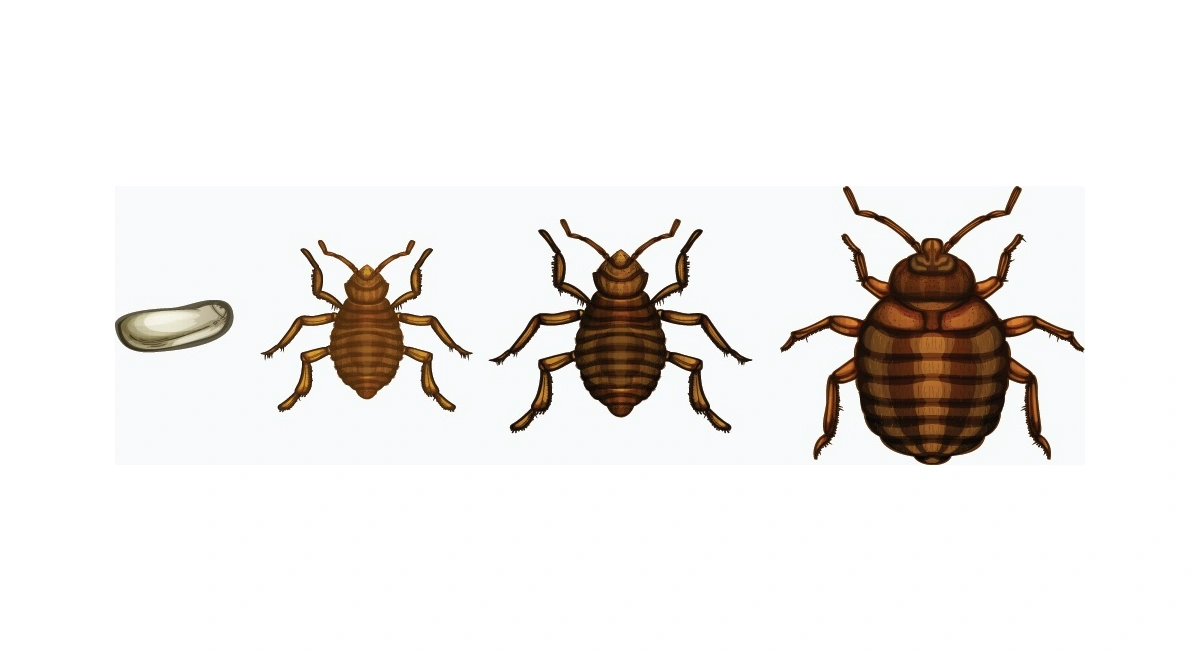
In addition to the egg, there are five immature nymph stages followed by one sexually mature adult stage. Each stage requires at least one blood meal to progress to the next, which explains how bed bugs reproduce fast once they establish themselves in a home.
Under ideal conditions, the full bed bug reproduction cycle from egg to adult takes about 4 to 6 weeks, with adults living for several months and females laying hundreds of eggs in their lifetime.
Bed bugs thrive in temperatures between 21°C to 32°C, which makes Singapore homes an ideal environment. Warmer climates speed up the life cycle and increase the eproduction rate, while colder temperatures may slow it down, but not stop it completely.
All it takes is one fertilised female introduced through travel, furniture, or clothing to start an infestation. Given the right conditions, this lone bug can build a population of thousands in just a few months, which shows just how fast bed bugs reproduce.
Bed bug eggs are tiny, white and sticky, allowing them to remain safely attached to surfaces even under pressure. This makes them difficult to vacuum or brush away and explains why infestations can reappear even after visible bugs are removed.
Once hatched, nymphs must feed within days to continue developing. Though smaller than adults, they are still capable of biting and causing skin reactions. Every nymph that successfully feeds is a future reproducing adult.
If you discovered bed bugs in your home, one of the first steps you should do is to call a pest control company who will come up with an effective bed bug control program. The pest professionals will perform a diligent inspection, and eliminate both eggs and adults through heat treatment and formulated spray. 2 to 3 treatments are required to carry out at intervals to cover the bed bug life cycle. Following the treatment, you can sign-up for periodic maintenance to keep your home bed bug-free. The pest control specialists will also advise you on useful tips and recommendations in minimising similar episodes. Read here to find out more on Rentokil Bed Bug Price.
As pest control specialists, we strongly advise against treating bed bugs with pesticides yourself, because unlike other pests, bed bugs are harder to eliminate on your own. Not only they are a challenge to spot due to its tiny size but also they are able to reproduce quickly in numbers, making it nearly impossible to eliminate them by yourselves.
Unfortunately, there are limitations in control efficacy and reach through DIY sprays you buy over the counter, due to its formulation and application method. What’s more, when used incorrectly, you risk not only worsening the problem but exposing your household to unnecessary chemical safety risks as well.
For effective bed bug treatment in Singapore, find out the six critical questions to ask a pest specialist to ensure that you are getting the best advice and options or contact us at (65) 6347 8138.