myRentokil
myRentokil login© 2026 Rentokil Initial plc and subject to the conditions in the Legal statement
Ants are common household pests that lurk around the bathroom, kitchen, living room and dining hall. They are small and tiny, generally harmless but once in a colony or invade in a troop, ants infestation can get serious and annoying, and worse of all, pose some health threats. In this article, Rentokil shares the ten questions you need to ask about ants’ control. Read on to find out more.
Agenda:
The four usual suspects of the common household ants include the sugar ants, crazy ants, pharaoh and carpenter ants. Firstly, sugar ants are perhaps the most common kitchen enemy because of their attraction to water, sugar and any sweet food they can feed on. With an abundance of food supply ranging from cakes, biscuits, sweet drinks and anything high in carbohydrate, it is no wonder why sugar ants that are typically translucent in body colour are no surprise lurking at food related areas in the home.
Secondly, crazy ants as the name suggests may react in a less orderly manner when disturbed and provoked. Their colony disperse and scatter around hence increasing the challenge in getting rid of ants with insecticide spray. Similarly they have a love for sweet diets, however they have a different outlook that is usually dark red or blackish in colour.
Thirdly, the pharaoh ants have yellow to brown in colour and enjoy the rich palette of greasy and fatty meals, including meat and anything with protein. They form colonies easily and using self-remedy for ants at home usually do not work on this species. In fact, spraying directly on these ants causes the colony to split and scatter across the home, thus containing them becomes a problem.
Finally, perhaps the most challenging and less familiar ant species are the carpenter ants. These species are different from the common bunch of ants with its connection to wood. While they still feed on protein, sugar and sweet honey, they attack wood by tunnelling their way through. Kitchen and dining hall may not be their top haunt; instead, they favour the outdoors where trees, wood, timber and shrubs are found. However, they are different from termites as termites feed on wood and display different signs of infestations.
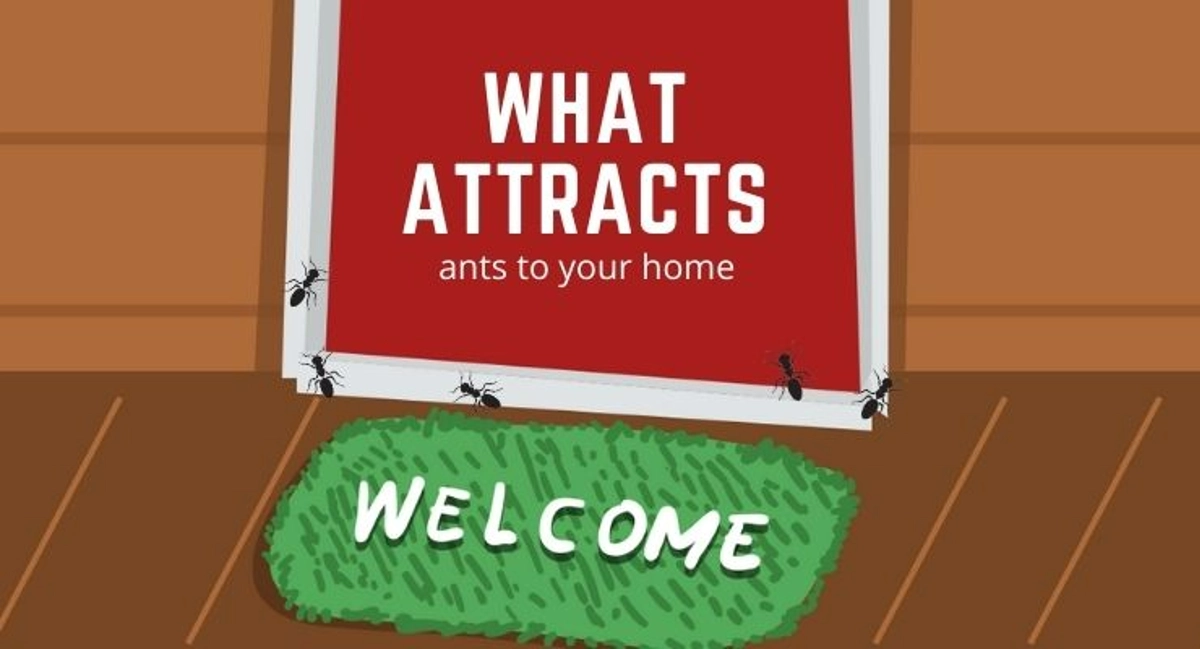
The easiest guess on what causes ants to invade your house is because of their need for food and water, particularly the diet and staples we all go for. Here are more factors that causes a pest infestation:
Read also: What are your options in dealing with an ant infestation

Compared to the more detrimental impact caused by pests that involve health and structure, ants are perhaps less hazardous, however, their presence should not be ignored because they can still harm us to some degree.
Firstly, they cause stress and hassles by scattering around or traveling in lines that seem to be impossible to get rid of ants permanently. They disappeared for a short while before returning to lurk around your home again. Secondly, ants maybe your food supplies. It is recommended to throw the stash away because of the risk that they are breeding on the food. Thirdly, some ants do bite, especially fire ants where ant bites sting and may cause an allergy or skin infection. Fourthly, because ants carry harmful pathogens especially bacteria through contact with unsanitised surfaces, they can cause food contamination and diseases such as Salmonella and Dysentery. Above all, perhaps the more detrimental harm is the furniture damages and wood items destroyed by carpenter ants, and cost monetary impact in repairing or replacing them.
Ideally, you cannot remove pests permanently even if you have the best ant control service or keeping the home spot clean. This is because a pest can occur anytime so long as some conditions favourable to attract an ant are happening. For example, your home has cracks and holes that allow ants to crawl in or you may have brought in some ants from outside through your shoes, belongings or body. However, here are ants’ prevention tips to get rid of ants effectively including:
Generally the pest control prices for ants removal are affordable and typically do not cost a lot to treat and maintain. Compared to other pests that require baiting units, tracking decide or complex application methods, ants treatment are usually set at a lower cost as it is a more straightforward and common home pests to treat. However, there are factors that may increase the price factor such as severity of ants’ infestation, area of the premise to treat (typically in a huge compound or residential area), choice of active ingredient (effective vs general efficacy) and frequency where multiple treatments are required to deal with an acute or surge.
Other factors that impact price involve a range of both tangible and intangible attributes and with over 350 pest control companies in Singapore, it is then essential to evaluate a credible and trustworthy pest control specialist to perform the job for you.
There are many reasons why a treatment can be ineffective regardless diligently carrying out the right processes. For instance, pest identification can be incorrect since ants and termites are reasonably similar unless with professional pest species identification. Wrong pest identity would mean carrying out the incorrect treatment and worse of all, worsening the current pest condition. In addition, the quality and dosage of active ingredient and baits use matters, while superior solutions bring better efficacy. Besides, location and targeting the right key risk area is essential in order to apply active ingredients at the right spot. Above all, household habits and facility maintenance plays a critical role that results in pest attraction. In summary, ensure you have a consistent pest control and home maintenance regime to ensure your treatment is bringing optimal results.
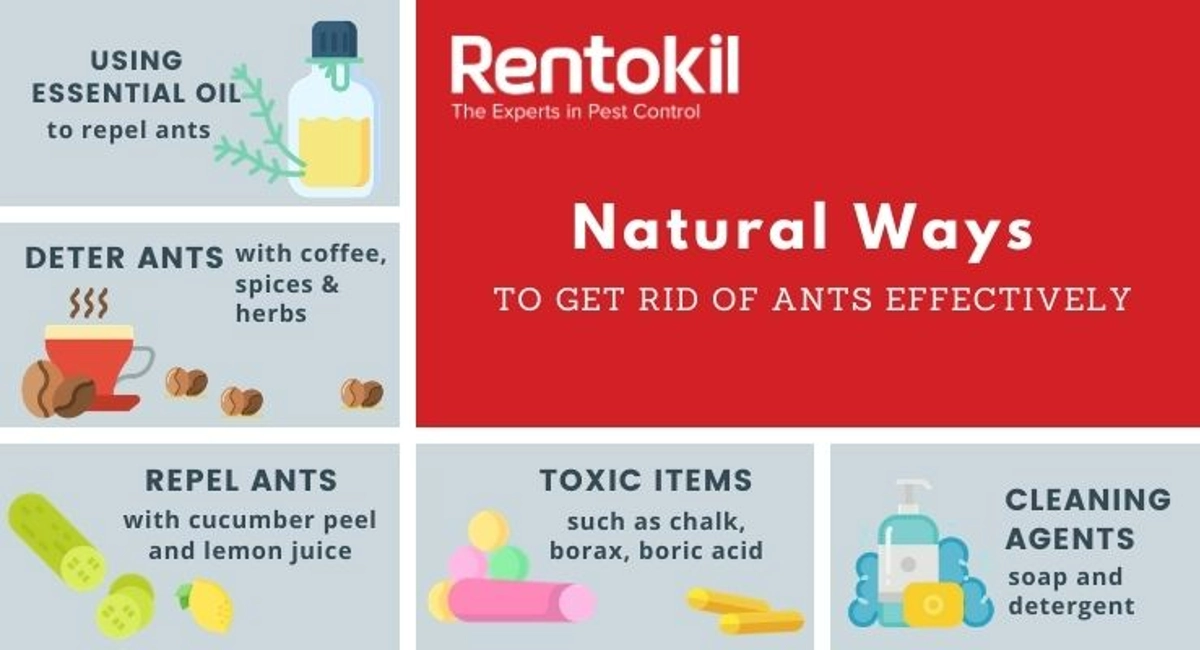
Going the safe and natural way is the favorite option of many to get rid of ants. Especially homes with kids and elderly where health and safety is key. Rentokil Initial collates the top common natural ways to for pest prevention in your home:
Firstly, observe any live crawling ants around, particularly if there are more ant populations than usual. Focus on ants’ common visited areas and hiding spots including kitchen top, cabinets, wall and near appliances or where food supplies are stored. Secondly, ants leave a pathway by laying their pheromone as a trial for food source navigation and communication to other ant members. Thirdly, find any nest that resembles those of piles of soil or diet. They often build their nests in dark and quiet locations that are difficult to spot and detect. Finally, perhaps the least obvious but possible signs of ant infestation is the bites and feeling unwell due to food contamination. Instead of guessing if your home has an ant problem, or worse of all a termite infestation, it is best to leave the detection and home checking task to the professionals.
Besides they are named similar such as white ants or termites and their close association to wood and furniture, both species are very different in terms of outlook, diet, habitat, infestation signs and treatment options. For example, termites have equal size and shape of wings with a straight antennae and balanced body width whereas ants’ wings are different in size with a narrow waist and bent antennae. Although both pests need moisture to survive, termites feed on wood and cellulose material whereas ants prefer sweet, fatty and greasy diets. One last difference is that termites live underground in the soil and within structures, however most ants hide in dark and quiet places, usually indoors within the home besides the carpenter ants that hang around outdoors.
You may also like: What are the outdoor pests we need to be wary of
We recommended engaging early pest control solutions to assure protection and consistent maintenance of your home from pest problems. However, there are indicators that warrant a need to call for professional pest control.
Call Rentokil Singapore at (65) 6347 8138 for pest control services today.