myRentokil
Manage your business
Having a presence in over 90 countries around the world and a large number of customers in each country, provides a vast amount of data on pest infestations in businesses and homes. It has taken one of the biggest advances in pest control in the last 100 years to be able to gather insights from this knowledge base — digitisation. The digitisation of data gathered by our pest control technicians allows rapid access and analysis. In this blog, to give a taste of this potential, we have extracted a small portion of this resource to show the most common urban pests in ten cities around the world.
Analysing pest data on both a local and global scale can give previously hidden insights into pest behaviour, infestation patterns and the effectiveness of different treatments. This is essential for developing better ways to prevent and eliminate pests. This is also especially important for reducing and avoiding the use of pesticides to reduce the risk of poisoning wildlife and people. Also, throughout history, pesticides have had limited lifetimes of effectiveness as pests always develop resistance to them, which drives the need to find new methods of control.
A wide range of data is collected by technicians while surveying and treating customer premises. This is now recorded on digital devices and automatically sent to a central database. This data can also be collected autonomously by connected electronic devices that monitor or capture pests using a range of sensors and wirelessly transmit it to a central database. The types of devices are steadily growing, covering an increasing number of pests.
Having digitised data stored in a central database makes it accessible online for analysis with sophisticated software, including AI, to find patterns and hidden insights for individual sites or a global perspective. For customers, there are several benefits:
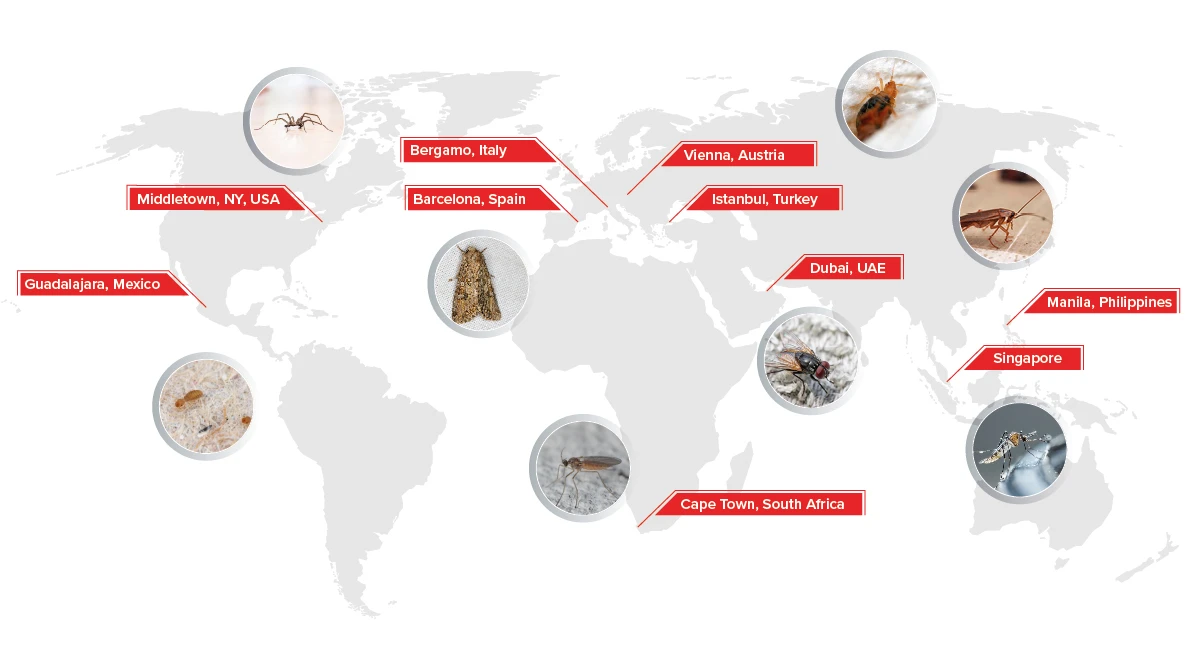
As an example of the power of the data, we extracted pest infestation data from our master database for the top 30 cities around the world. We then chose 10 of these to represent different regions and continents (see graphic below).
Global differences in pest infestations are determined by a number of factors, including the local climate, environment, fauna and flora, types of businesses and level of urban development. Differences in pests are also determined by the main type of customer in each location or even by local legislation, as you can find out below!
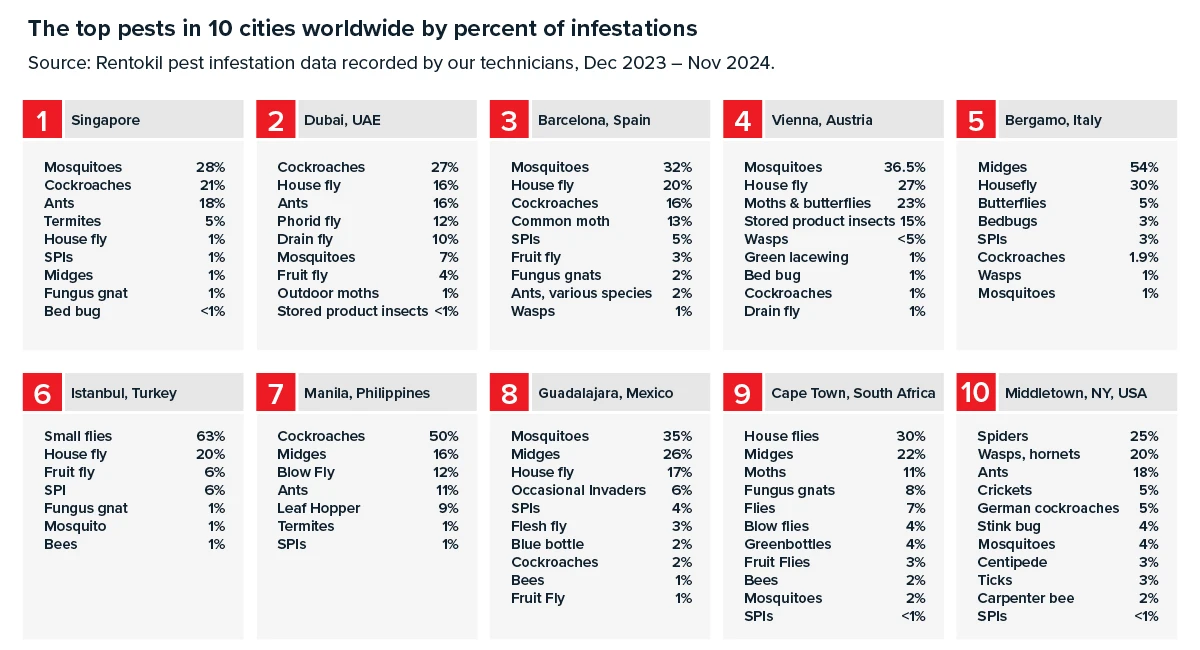
Here are the main pests in the 10 chosen cities from around the world.
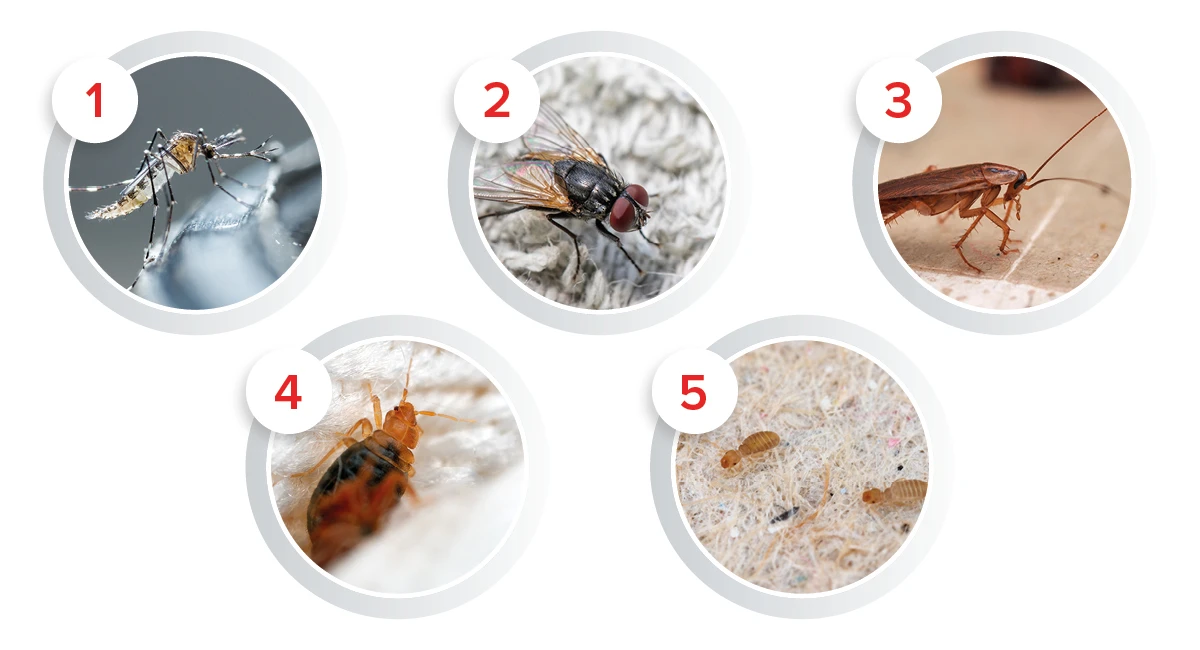
A range of other insects occur in multiple cities, including ants, some of which are invasive species, and midges (includes a wide range of species) which are among the top pests in Bergamo, Cape Town, Manila and Guadalajara. Fruit flies occur worldwide and are associated with food businesses, and other small flies such as the phorid fly, drain fly and fungus gnat have a global presence. Obviously, spiders occur everywhere humans are present, but Middletown in the US is unique in these cities in spiders being both the number one pest for local customers and the only place where some species are a pest.
The data also highlights the number of insect types that can be pests in various situations — or be recorded as present on a customer premises. Top of the list is Dubai, with 97 categories, followed by Singapore with 86 and Middletown with 79. It also illustrates the expertise of the local technicians in identifying a wide range of pest species.
The analysis of digital pest data, both locally and globally, offers a powerful lens through which to understand pest behaviour, help predict infestations and optimize pest control strategies.
By harnessing the insights gleaned from this data, we can move towards more targeted treatments, early detection, and real-time monitoring. This approach not only minimizes reliance on harmful pesticides but also tailors solutions to individual needs, fostering healthier environments for all.
As technology continues to advance, so too will our ability to leverage pest data, ultimately paving the way for a future where pest management is more effective and more sustainable.
Technology and data-driven digital pest monitoring for effective, smart pest management solutions