myRentokil
Manage your business
The mouse trap — a seemingly simple device, yet it has a complex history and has evolved considerably over the centuries.
While the term evokes familiar images — perhaps a classic spring- loaded trap or even Agatha Christie's famous play — its definition has shifted over centuries. From Shakespearean metaphors to the digitally connected traps of today, the mouse trap has consistently adapted to meet the evolving needs of the day.
As Rentokil celebrates 100 years of protecting businesses and homes against pests, join us as we look back at the history of mouse traps. We’ll explore the very first snap trap, early inventions and the radical transformation brought about by technological advancements.
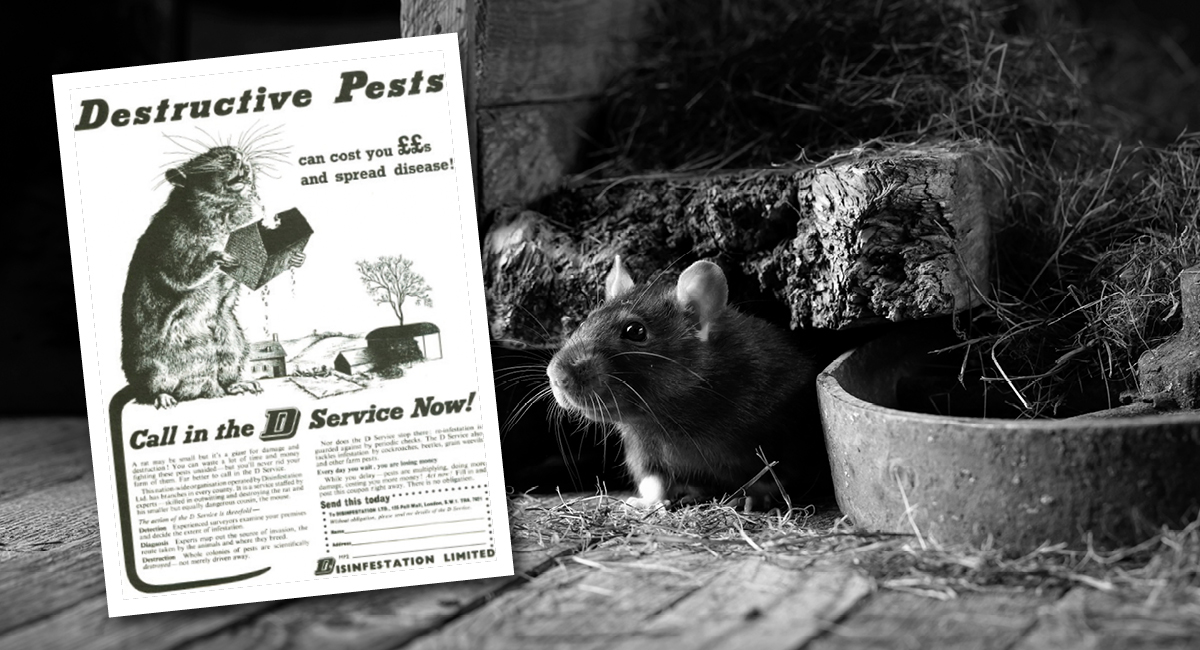
Firstly, it’s worth noting that rodents have been a problem for humans since time immemorial. While there’s some evidence to give us an indication of what early control practices looked like, the lack of detailed records makes it difficult to definitively understand the full range of techniques used in ancient times and their effectiveness.
Nevertheless, archaeological evidence suggests that the earliest rat traps were used by the ancient Egyptians. These rudimentary rodent traps were made from a variety of spring materials, including wooden bow and curved springy wire. However, they weren’t the only method used to control mice at the time. In fact, prayers and cats played a leading role in the fight against rodents and it was common practice to ask for divine protection against rodents and use cats to help in the battle.
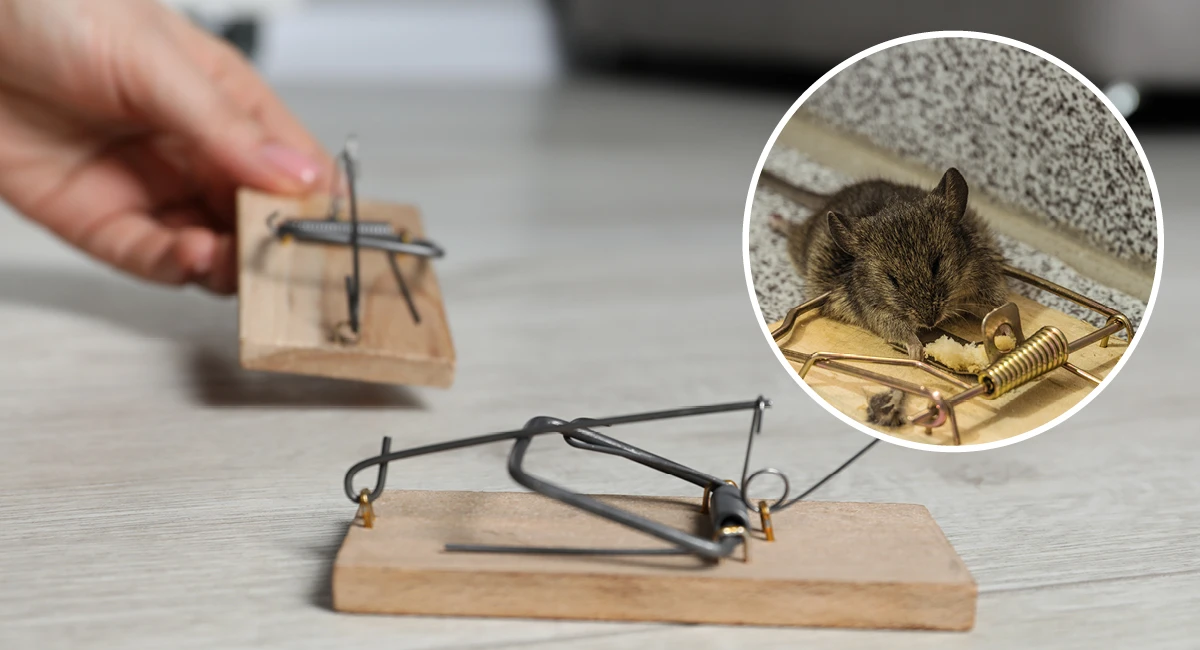
It’s no surprise that references to spring-loaded trap mechanisms date back to the 1500s. However, William C. Hooker was the first to patent the classic spring-loaded mousetrap in 1894. It revolutionised the industry, and although the design was relatively simple, its ingenuity is reflected in the fact that this style remains popular even today.
A few years later, in 1898, James Henry Atkinson patented a similar product called the “Little Nipper”. The two traps were similar in many ways, but Atkinson’s differed in one crucial way. While Hooker’s design relied on the mouse pulling on the bait to trigger the spring-loaded bar, Atkinson took this a step further. His patent included versions of the trap that used a weight-activated treadle as the trip mechanism. This meant that the trap was activated and snapped shut when a mouse stepped on a small platform, rather than waiting for it to interact with the bait. This new design was more effective than previous versions and was also considered more humane as it killed the rat instantly.
Hooker and Atkinson are widely considered to be the inventors of the modern mousetrap, with Atkinson’s “Little Nipper” being a dominant mousetrap on the market to this day. If you asked the average person to think of a mousetrap today, they would likely imagine the ‘Little Nipper’.
Some of the early mouse traps that followed offered multi-catch protection against mice with 2 to 3 holes in a piece of wood with a metal spring that was released to pull a noose in the hole.
The Little Nipper sparked the invention of numerous other rat-trapping inventions you might be familiar with. Glueboards, electric traps and live-capture traps all gained popularity over the 1900s. Let’s take a closer look at some of the options that became available.
The next major development in rodent control was the invention of the glueboard. As the name suggests, glueboards are boards coated with non-drying glue that are used to capture rodents. As a rodent scurries across the board, it sticks to the adhesive and is trapped. These are only effective indoors, however, as environmental conditions outdoors, such as moisture and dust, quickly render the adhesive ineffective.
The first glueboard is believed to have been invented in the 1970s and they’ve gained popularity in recent times. In terms of deployment, glueboards are arguably one of the simplest methods of trapping rodents; you place the board, and that's essentially it. No setting, baiting (beyond potentially adding a lure) or winding is required.
However, the use of glueboards is often discouraged, and more humane and effective methods, such as snap traps, are generally recommended.
Most people credit Benjamin Franklin with ‘discovering’ electricity in 1752. Following this, inventors were exploring all sorts of applications for this new technology, and it soon entered the pest control industry.
The idea of using electricity for pest control likely arose soon after electricity became widely available in the late 19th and early 20th centuries, and Bob Noe patented an electric mouse trap in 2000.
Electric mousetraps kill rodents with a jolt of electricity when they touch two metal points. They can be used for single-catch protection in homes or multiple-catch protection for commercial use. Today, many versions of electric traps exist — some that work and many that don't.
There are references to “deadfall” traps in the Middle Ages, for example in a book by Mascall. This was likely one of the earliest live-capture traps and the lid dropped down when the trigger was activated.
In 1870, W K Bachman patented what is likely to be one of the earliest live-capture mouse traps. Live-catch mouse traps offer a more humane alternative for mouse control. The rodent is lured in and captured alive before being released in a different location. This method removes the pest from a specific area without harming it. Some live traps feature windows so you can easily see if a mouse has been caught and release it as soon as possible without harm.
Although the ‘Little Nipper’ sparked the innovation of several other mouse traps over the centuries, Atkinson’s simple yet effective design and ease of use have contributed to its continued popularity.
The snap trap, particularly the ‘Little Nipper’ design, continues to be perhaps the most recognisable and widely used mousetrap.

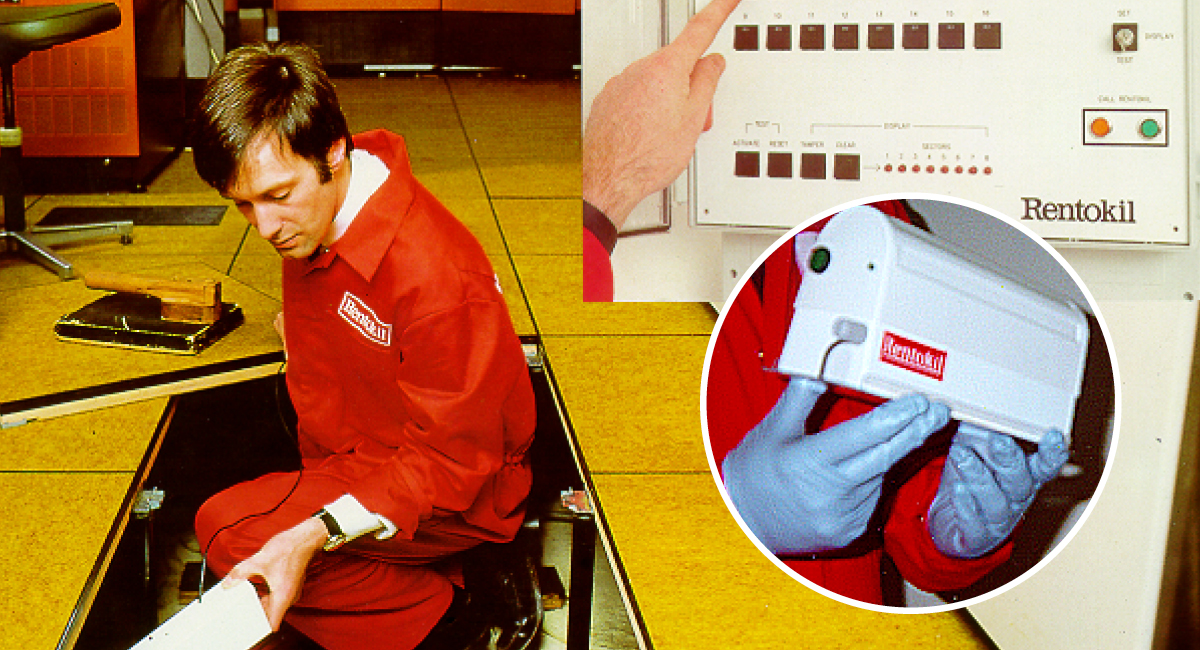
The latest chapter in the mousetrap's evolution is connected mouse traps, which have revolutionised the industry. Compared to non-connected methods, they can dramatically reduce the time taken to react to infestations.
Connected traps use sensors, wireless communication and often cloud-based platforms to monitor pest activity in real time. This means there’s no need for manual trap checking, as experts are alerted of pest activity as soon as a rodent is captured.
These connected units collect valuable data on pest activity, including when and where catches occur. This information can be used to identify hotspots, predict future infestations and optimise pest control strategies.
Rentokil scientists produced MouseAlert, and it took years of development to evolve into RADAR — the world’s first connected mouse trap. With continuous development and improvements, this has now evolved to offer businesses twice the protection with RADAR X. RADAR X is an evolution of RADAR with two trapping chambers for double the protection and peace of mind.

Connected traps are just the beginning of what's possible with connected pest control. As technology advances, we can expect to see even more sophisticated solutions emerge, and the humble mouse trap will continue to develop.
Round-the-clock digital pest management and monitoring